Hola amigos de nortonteatro.blog. Yo soy Nortan Palacio conocido artísticamante, y entre los esclavos del Demonio, como Norton P.
Hello friends of nortonteatro.blog. I am Nortan Palacio known artistically, and among the slaves of the Devil, as Norton p.
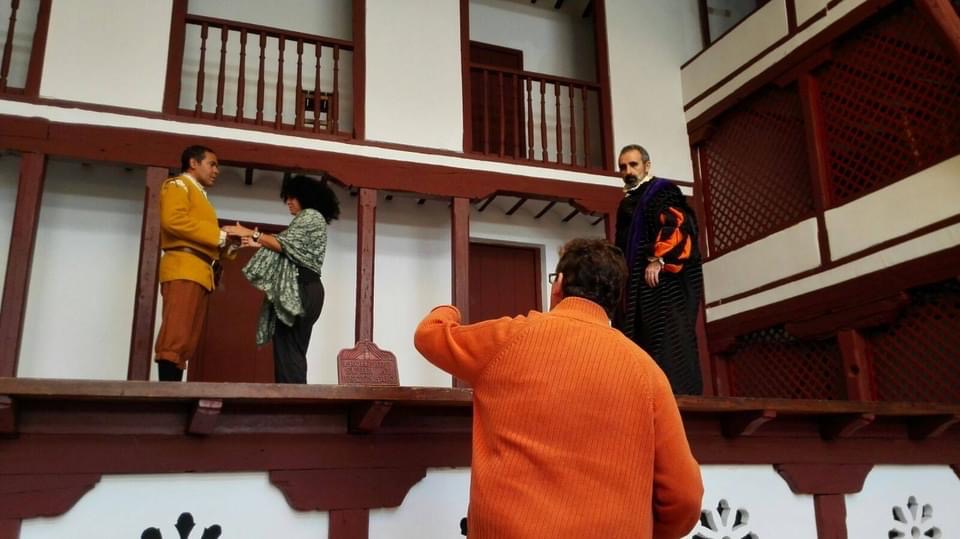
I AM THERE (ON THE LEFT) IN THE CORRAL DE COMEDIAS OF ALMAGRO, REHEARSING THE CHARACTER LIGURIO IN THE COMEDY LA MANDRÁGORA BY NICCOLO MACHIAVELLI
Viernes 25 noviembre 2023
ENGLISH VERSION: BELOW SPANISH VERSION
ANÉCDOTA 90
LOS DRAMATRUGOS SEGUNDONES EN EL SIGLO DE ORO ESPAÑOL: ANTONIO MIRA DE AMESCUA II
Primero que nada, quiero dar las gracias a quienes me leen, porque con sus mensajes y muestras de apoyo me dan alas para seguir con este blog, que empezó como una especie de autoayuda para quitarme unos resquicios de depresión cuando tuve que dejar de hacer teatro por un accidente, pero, sin querer queriendo, lleva ya casi tres años y, con esta de hoy 90 entradas, que se dicen pronto. Gracias.
Ahora sí, vamos con nuestro caso. Después de contar en la anterior anécdota la novelesca vida de Antonio Mira de Amescua, en esta vamos a hablar de su obra. Que se sepa, no fue un autor de los más prolíficos pues se tiene por seguro que escribió unas sesenta comedias y alrededor de diez autos sacramentales. También es notorio que debido a su cercanía de edad con Lope de Vega (Antonio era unos ocho años menor que Lope) sus comedias siguen en muchos casos a las del Fenix, eso sí, con sus particularidades.
Una de las más importantes era que, por su erudición y gusto por las materias históricas y teológicas (ya dije que se ordenó sacerdote a muy temprana edad); escribió bastantes comedias de tema histórico ya español ya extranjero, pero que siempre llevaban aparejados asuntos religiosos y que Mira de Amescua intercalaba en las tramas de dos formas. Una era por comparación: es decir que la historia tratada tenía consonancias y parecidos con alguna historia bíblica y nuestro autor la usaba como espejo (reflejo) o como ejemplo. Entre estas, algunas de la mas importantes son Los prodigios de la vara y capitán de Israel, donde pone come ejemplo la historia de Moisés, El clavo de Jael que la contrapone o refleja con la historia de Débora, etc.
La otra manera de entrelazarlas era haciéndola contemporánea con otros hechos de orden religiosos acecidos en el mismo tiempo de la historia contada, como podían ser las disputas teológicas entre filósofos o padres de la Iglesia, las celebraciones de concilios, etc. Así nos encontramos con La mesonera del cielo en la que a través de la vida de un ermitaño llamado Abraham, dramatiza la contienda entre el ascetismo y el amor (en esta comedia se dice que se encuentran muchos precedentes del Romanticismo); Vida y muerte de la monja de Portugal en la que cuenta como una monja de la Anunciata de Lisboa engañó al famoso erudito Fray Luis de Granada con unas llagas falsas, como contrapartida entre creer lo que se ve y lo que no se ve.
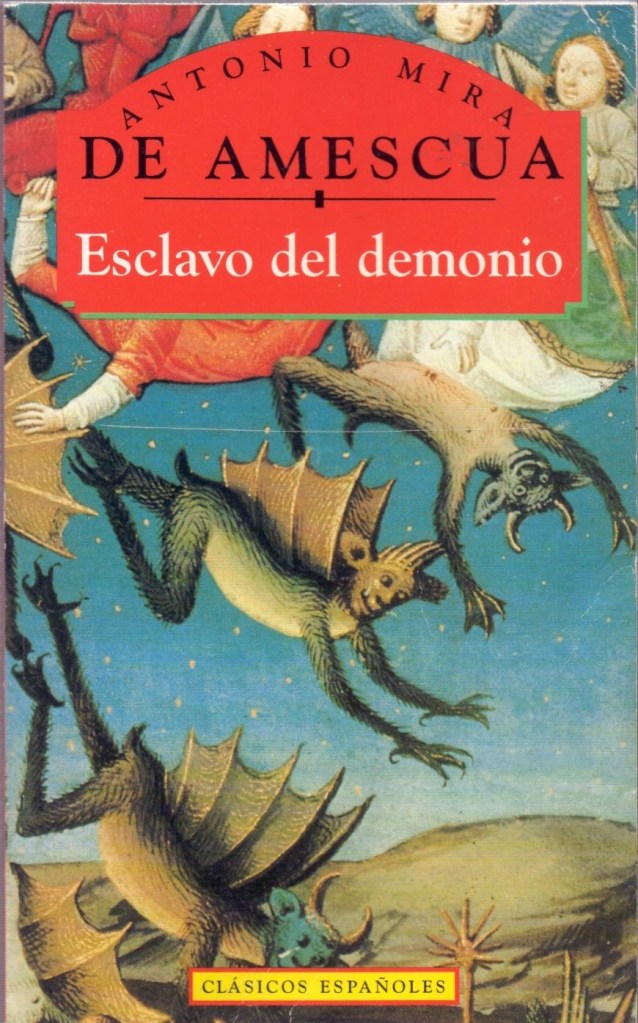
Pero de estas, su más famosa obra y una que se considera entre de las mejores del Siglo de Oro es: El esclavo del demonio; otra vez con el ejemplo de la disputa entre el ascetismo y el amor carnal, pero aquí el protagonista llega a vender su alma al diablo para que lo ayude en su vida amorosa. Esta comedia de Mira de Amescua está inspirada mayormente en una leyenda que se encuentra en la Historia General de Santo Domingo y de su Orden; es la historia de San Gil de Santarem, pero nadie duda de que también tiene reminiscencias del Fausto de Christopher Marlowe, cuya leyenda conocía nuestro dramaturgo. Uno de los mayores hallazgos que esta obra otorgó al repertorio teatral universal es el recurso escénico del esqueleto que el protagonista abraza al final, cuando cree estar abrazando a su amada. Así, esta obra sirvió de inspiración a importantes dramaturgos y obras posteriores como El Anticristo de Juan Ruiz de Alarcón y, sobre todo, El mágico prodigioso de Calderón de la Barca.
También escribió obras exclusivamente de historia nacional como La desdichada Raquel, sobre la tan traída amante judía de Alfonso VIII de Castilla; Las desgracias del rey don Alfonso el Casto basada en una de las leyendas que rodean a Bernardo del Carpio o No hay dicha ni desdicha hasta la muerte, basada en la figura de Diego Porcelos, Conde de Castilla.
De las historias extranjeras usó temas bizantinos en La rueda de la fortuna y El ejemplo mayor de la desdicha, o temas de la materia de Carlomagno en: Los carboneros de Francia y El primer Conde de Flandes.
Hay otro grupo de comedias que no despierta el interés que debería, por ser el que más discurre por la similitud con Lope (sin que quiera decir que son malas) y es el de las de costumbres, entre las que destacan: La tercera de sí misma, No hay burlas con las mujeres, La casa del tahúr o la muy destacable: La fénix de Salamanca. Entre las de temas palatinos son las mas conocidas Galán valiente y discreto y El palacio confuso.
Y, finalmente, entre sus autos sacramentales siempre se resaltan: El sol de medianoche, La jura del Príncipe, Las pruebas de Cristo y El heredero. Que también siguen la senda los de Lope, es decir, sin llegar a la genial fusión entre símbolo y acción que no se alcanzaría sino con Calderón de la Barca.
La figura de Mira de Amescua se está recuperando, como dije, gracias a la labor editorial de Agustín de la Granja que sigue editando su teatro completo y esperamos que, de esta labor, se despierte el interés de las compañías teatrales y la curiosidad de los espectadores, para que Antonio Mira de Amescua vuelva a las tablas como en su tiempo: con mucho éxito.
Nos vemos en la próxima anécdota
ANECDOTE 90
THE ‘SECOND’ PLAYWRIGHTS IN THE SPANISH GOLDEN AGE: ANTONIO MIRA DE AMESCUA II
First of all, I want to thank all who read my anecdotes, because with their messages and signs of support they give me wings to continue with this blog. It began as a kind of self-help to get rid of some pockets of depression when I had to stop doing theater due to an accident hurting an ankle. However, unintentionally, it has been almost three years, and with the one of today, 90 anecdotes. Thank you again.
Now, let us get to the case of today. After, the previous anecdote, talking about the novelist life of Antonio Mira de Amescua, in this one I am going to talk about his work. As far as is known, he was not one of the most prolific authors, for it is certain that he wrote only about sixty comedies and about ten sacramental plays. It is also noteworthy that, due to his closeness in age to Lope de Vega (Antonio was about eight years younger than Lope), his comedies follow in many plays the rules of the Phoenix, although with his own particularities.
One of the most important peculiarities was that because of his erudition and taste for historical and theological matters (I have already said that he was ordained a priest at a very early age), he wrote quite a few comedies with, both Spanish and foreign historical themes, but always involving religious themes. Also, Mira de Amescua always interspersed these in the plots in two ways. One was by comparison: that is, the story in question had conformities and similarities with biblical stories, and our author used it as a mirror (reflection) or as an example. Among these, some of the most important are Los prodigios de la vara y capitán de Israel (The Prodigies of the Rod and Captain of Israel), where he gives the story of Moses as an example, El clavo de Jael (The Nail of Jael) which contrasts or reflects it with the story of Deborah, etc.
The other way of interweaving these themes was to make the play contemporary with religious events of that period, such as theological disputes between philosophers or leaders of the Church, the celebration of councils, etc. Thus we find La mesonera del Cielo (The Innkeeper of Heaven) in which, through the life of a hermit named Abraham, he dramatizes the struggle between asceticism and lo,ve (it is said that in this comedy many precedents of Romanticism are found) Vida y muerte de la monja de Portugal (Life and Death of the Nun from Portugal) in which he tells how a nun of the Annunciation of Lisbon deceived the famous and erudite Fray Luis de Granada with false wounds, as a counterpart of believing what is seen and what is not seen.
But of these, his most famous work and one that is considered among the best of the Golden Age is El esclavo del demonio (The Slave of the Devil); again with the example of the dispute between asceticism and carnal love, but here the protagonist goes so far as to sell his soul to the devil to help him in his love life. This comedy by Mira de Amescua is mainly inspired by a legend found in the General History of St. Dominic and his Order. That is the story of St. Giles of Santarem, but no one doubts that it is also reminiscent of Christopher Marlowe’s Faust, the legend that that was known by our playwright. One of the greatest discoveries that this work gave to the universal theatrical repertoire is the scenic resource of the skeleton that the protagonist embraces at the end, when he believes he is embracing his beloved. Thus, this work served as inspiration for important playwrights and later works such as El Anticristo by Juan Ruiz de Alarcón and, above all, El mágico prodigioso by Calderón de la Barca.
He also wrote plays about national history such as La desdichada Raquel, The Miserable Rachel , about the much-touted Jewish mistress of Alfonso VIII of Castile; Las desgracias del rey don Alfonso el Casto (The Misfortunes of King Alfonso the Chaste) based on one of the legends surrounding Bernardo del Carpio, or No hay dicha ni desdicha hasta la muerte (There is Happiness nor Misfortune until Death), based on the figure of Diego Porcelos, Count of Castile.
From foreign histories he used Byzantine themes in La rueda de la fortuna (The Wheel of Fortune) and El ejemplo mayor de la desdicha (The Greatest Example of Misfortune), or themes from Charlemagne’s life in Los carboneros de Francia (The Coal Miners of France) and El primer Conde de Flandes (The First Count of Flanders).
There is another group of comedies that does not arouse so much interest. That is because those are very similar to those of Lope (that does not mean that they are bad). They are about customs, among which stand out: La tercera de sí misma, No hay burlas con las mujeres, La casa del tahúr, the very remarkable La fénix de Salamanca (The Phoenix of Salamanca). Among those with palatine themes are the best known Galán, valiente y discreto and El palacio confuso.
And, finally, among his Sacramental Plays, the following always stand out: El sol de medianoche, (The Midnight Sun), La jura del Príncipe (The Prince’s Oath), Las pruebas de Cristo (The Trials of Christ) and El heredero (The Heir). That these plays also follow the path of Lope’s, that is, without reaching the brilliant fusion between symbol and action that would be achieved by Calderón de la Barca.
The figure of Mira de Amescua is regaining interest, as I said, thanks to the editorial work of Agustín de la Granja who continues to edit his complete theatre work. I hope that, from this work, the interest of theatre companies and the curiosity of the spectators will be awakened, so that Antonio Mira de Amescua returns to the stage as in his time: with great success.
See you in the next anecdote.


Como siempre son muy bonitas y impresionantes tus novelas y como se acerca las fiestas te deseo felices fiestas y que sigas escribiendo y la inspiración te acompañe en esta Navidad un saludo
Me gustaMe gusta
Gracias, Rosana. Cómo digo: las palabras de los que me leen me llenan de aliento. Un abrazo
Me gustaMe gusta