
Hola amigos de nortonteatro.blog. Yo soy Nortan Palacio, conocido artísticamente y en mis expedientes de limpieza de sangre, como Norton P.
Viernes 11 noviembre 2023
ANÉCDOTA 89
LOS DRAMATRUGOS SEGUNDONES EN EL SIGLO DE ORO ESPAÑOL: ANTONIO MIRA DE AMESCUA
Como buen autor de anécdotas de Mentidero, me gusta contar historias como la de hoy. Y es que resulta que las enigmáticas partes del nacimiento y de la identidad de la progenitora del doctor Antonio Mira de Amescua, por sí solas, darían para una comedia de su Siglo de Oro, quizá una de las llamadas comedias moriscas, porque el enredo es casi tan disparatado como algunos de los que se vierten en ese subgénero. Voy a ir por partes.
Primero que nada, debo aclarar que de momento casi que solo se puede acceder a los datos de sus primeros años de vida a partir de dos expedientes de limpieza de sangre[1] que se le exigieron a nuestro autor; uno en 1609 y otro en 1631, pero resulta que uno de estos dos expedientes se perdió (otro caso extraño) en 1914; y otra documentación indirecta con la que se cuenta apenas permiten deducir o modificar los datos de los expedientes citados. También es de importancia el hecho de que a Mira de Amescua se le exigieran esos dos expedientes, porque eso da pie a las dudas acerca de la identidad de la madre, ya que de su padre se sabe que sí era «cristiano viejo»[2].
Con todo esto, podemos empezar esta biografía diciendo que la fecha de nacimiento antes la establecían los expedientes sin exactitud entre 1574 y 1577, pero, después, algunos nuevos datos de 2005 han llevado a concluir a varios investigadores y, sobre todo, a Agustín de la Granja (sabueso de primera magnitud)[3] que la fecha sería el 17 de enero de 1577, coincidiendo con el día de San Antonio Abad (de ahí su nombre de pila) y, sin duda, nació en Guadix provincia de Granada. Era hijo natural de Melchor de Mescua y Mira que era caballero descendiente de aquellos que lucharon en la reconquista de la ciudad de Baza y que después se asentaron en Guadix siendo una de las familias más importantes de esta localidad. Melchor, después, también tomó parte en la guerra de Granada.
Hasta aquí todo normal, los enredos y dudas comienzan porque los documentos dicen que nuestro escritor «nació se crio en la casa de su padre y fue cuidado como hijo por sus dos tías solteras, hermanas de su padre y que él tenía un ama que lo cuidaba muy bien».
Y ¿por qué no con su madre? ¿Quién era su madre?; según los documentos era Beatriz de Torres Heredia, mujer soltera también de buena familia procedente de Berja, cuyo padre era un Médico amigo de Melchor. Esto añade otros cuestionamientos: si Melchor y Beatriz eran ambos solteros y de buenas familias, es decir que no habría impedimento de clase, por qué no se casaron si tuvieron un hijo. Por qué no le dieron ninguno de los apellidos de ella al niño. Por qué no se la menciona para nada más.
Y aquí es donde viene la tercera en discordia y la que podría ser protagonista de la comedia morisca, todo esto se basa en una hipótesis de Carlos Asenjo Sedano: en 1994 este investigador descubrió que Melchor, el padre de Antonio, tenía una esclava morisca llamada Angélica Micaela a la que llevó consigo como acompañante a la guerra de Granada y que le correspondió en la cabalgada de la Ragua. ¿Y si en esta cabalgada Angélica Micaela hubiera engendrado a Antonio? ¿y si ella fuera «el ama que lo cuidaba muy bien»? A todo esto hay que añadir otro descubrimiento curioso que avala la hipótesis de Asenjo Sedano: justo en las fechas en que al niño Antonio lo enviaron a estudiar fuera, en 1583, Melchor le concede la libertad a Angélica Micaela, aunque por su condición de morisca y esclava libre, no pueden regularizar su situación y por eso tampoco se casa con ella.
En fin, como dijimos: carne de Mentidero.
Pues bien; a falta de documentos que nos lleven a concluir si estas conjeturas pudieran ser reales, pasemos a revisar la trayectoria vital de nuestro dramaturgo, menos enigmática, y en la próxima anécdota ya nos ocuparemos de sus obras dramáticas.
En 1584 inició sus estudios en Granada bajo el patrocinio del obispo de Guadix y en 1587 va a estudiar a la universidad de Alcalá de Henares donde se gradúa de bachiller en 1591, vuelve a Granada para continuar con los estudios que lo llevaron a su ordenación de tonsura en 1593 con solo dieciséis años. Una vez ordenado se le concedió el beneficio de la parroquia de Santa Ana en Guadix. Aún así continúa con estudios de leyes entre 1594 y 1598 en la Universidad de Granada y en 1599 viajó a Salamanca para doctorarse en teología.
En estos tiempos empieza a escribir para el teatro y su primera comedia parece ser la Vida de San Torcuato que se representó en Guadix en 1593, aunque el texto está perdido, pero sí que se conoce un poder notarial de 1597 otorgado a su padre en Granada, para que cobre en Guadix unas comedias que se le adeudan. Y también se le reconoce ya como escritor de comedias celebrado en El viaje entretenido de Agustín de Rojas Villandrando en 1603.
En estos años viajaba mucho a Madrid y allí conoció a Lope de Vega, quién también lo aceptó como amigo y lo alabó como dramaturgo, así que con esas premisas empieza a soñar con dedicarse al teatro en la Corte, pero en 1609 fue nombrado capellán de la Capilla Real de la Catedral de Granada, cargo que había solicitado con interés, y sus ambiciones se mueven en dudas.
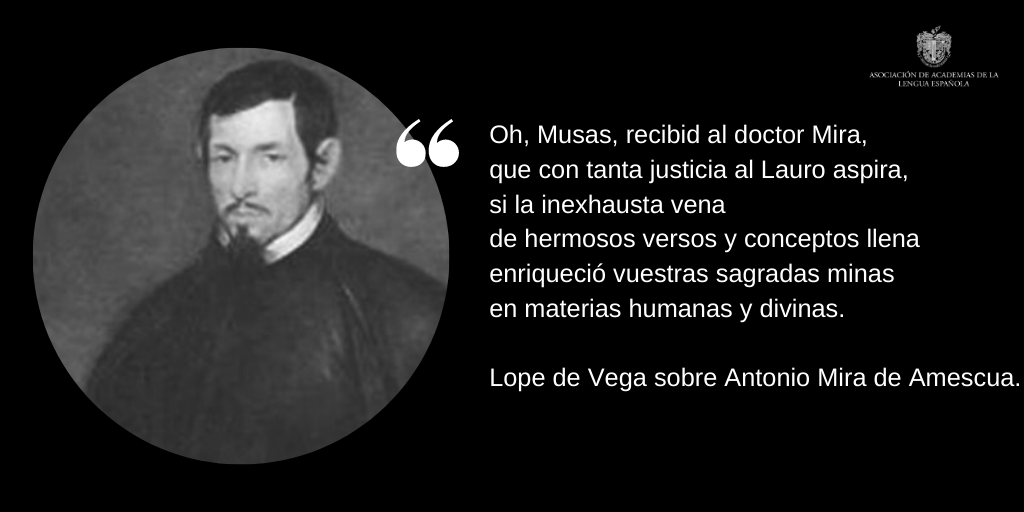
Sin embargo, para intentar estar en Madrid pasa a servir al VII Conde de Lemos, Pedro Fernández de Castro y Andrade y este lo elige entre una corte de ilustres poetas a los que se llevó a Nápoles cuando fue nombrado virrey. Allí estuvo hasta 1606 que volvió el Conde de Lemos. Quería seguir en Madrid y se convirtió en capellán del cardenal-infante don Fernando de Austria en 1619, lo que le acarreó muchos problemas mayores con el obispo de Granada por tener descuidada su Capilla Real en su Catedral.
Sin embargo permaneció mas de diez años en Madrid y fueron sus años de mayor gloria como dramaturgo. En la Corte también trabó amistad con Góngora, Cervantes, Tirso de Molina, Pérez de Montalbán o Calderón de la Barca, entre otros, casi todos lo admiraban y, sorprendentemente, no tuvo apenas disputas poéticas. Salvo una con Juan Ruiz de Alarcón contra quién escribió el libelo: A un poeta corcovado que se valió de trabajos ajenos.
Se cree que por la insistencia del obispo de Granada volvió a Andalucía, pero cambió su capellanía en Granada por un arcedianato en su ciudad natal, Guadix, donde se posesionó en 1632. A partir de ahí se le pierde la pista como dramaturgo y solo interviene en certámenes poéticos o prologando libros de algunos de sus amigos poetas. También allí se documenta que en sus últimos años, no se sabe si por no dedicarse a su verdadera afición, el genio se le agrió y tuvo varios incidentes con sus compañeros de trabajo: llegó a abofetear al maestreescuela de la catedral de Guadix. Falleció el 8 de septiembre de 1644 en su ciudad natal.
Ese olvido en el que cayó en su Siglo de Oro es el que lo acompañó hasta la segunda mitad del siglo XX en el que se empezó a recuperar su figura. El mencionado Agustín de la Granja, profesor de la Universidad de Granada, está editando su teatro completo y ya lleva editados doce tomos: sesenta y seis comedias y dieciocho Autos Sacramentales. Además ha despertado el interés de investigadores americanos e italianos.
Con el estudio del estilo y la compilación de las obras dramáticas del doctor Antonio Mira de Amescua te emplazo, querido lector, para la próxima anécdota.
[1] Para los que no estén iniciados en el tema de la limpieza de sangre en la España del Barroco, he de comentar que cuando se expulsó de España a los judíos y a los árabes que pudieron quedarse, después de la Reconquista, se les exigió su conversión al catolicismo, por una pragmática de conversión forzosa emitida el 14 de febrero de 1502 por los Reyes Católicos, pero no se les llamaba cristianos sino que se les siguió llamando judeoconversos, moriscos, mudéjares o incluso sarracenos. Cuando alguna de estas familias conversas quería progresar tenía que intentar que se olvidase su pasado árabe o judío, puesto que para acceder a cargos importantes, sobre todo eclesiásticos, se exigía ser limpio de sangre o cristiano viejo. Por eso se conoce que eran frecuentes los sobornos y el perjurio en estos expedientes de limpieza de sangre, para demostrar que se era cristiano viejo.
[2] Ver nota 1.
[3] No hay archivo que se le resista a Agustín de la Granja. Puedo dar fe de ello, puesto que he seguido una de sus investigaciones acerca de la atribución de dos Autos sacramentales: El labrador de la Mancha y El bosque de amor que se hallaban en manuscritos anónimos en la Biblioteca Nacional de España y en la Biblioteca Menéndez Pelayo de Santander y que a partir de los aportes de este investigador toda la crítica ha tenido que admitir que el autor es Lope de Vega.
ANECDOTE 89
THE ‘SECOND’ PLAYWRIGHTS IN THE SPANISH GOLDEN AGE: ANTONIO MIRA DE AMESCUA
As enthusiastic author of anecdotes about the ‘Mentidero’, I like to tell stories like today’s: And it turns out that the enigmatic parts of the birth and identity of the mother of Antonio Mira de Amescua, by themselves, would be enough for a comedy of his Golden Age. It could be one of the so-called Moorish comedies, because the entanglement is almost as crazy as some of those that are poured into that subgenre. I am going to take it one step at a time.
First of all, I must explain that at the moment it is almost only possible to access the data about the first years of his life from ‘two files of blood cleansing’[1] that were required from our author, one in 1609 and the other in 1631. But it turns out that one of these two files was lost in 1914: another strange happening. And other indirect documentation that is available hardly allows us to deduce and/or modify the particulars of the above-mentioned files. Another important aspect of fact that Mira de Amescua had to produce these two files is that it gives rise to doubts about the identity of his mother; About his father it is known that he indeed was an ‘old Christian.’[2]
With all this, we can begin this biography by saying that his date of birth had previously been established from inaccurate records between 1574 and 1577, but, later, new data found in 2005, have led several researchers and, above all, Agustín de la Granja (a hound of the first magnitude) to conclude that[3] the date would be 17 January 1577, coinciding with the day of San Antonio Abad (hence his first name) and, without a doubt, he was born in Guadix, a province of Granada. He was the natural son of Melchor de Mescua y Mira, who was a knight descended from those who fought in the reconquest of the city of Baza and who later settled in Guadix, being one of the most important families in this town. Melchior later also took part in the war of Granada.
So far all seems normal, but the entanglements and doubts begin because the documents say that our writer «was born and grew up in his father’s house, was cared for as a son by his two spinster aunts, his father’s sisters, and that his father had a mistress who took very good care of him.»
And why not with his mother? Who was his mother? According to the documents, she was Beatriz de Torres Heredia, a single woman also from a good family from Berja, whose father was a doctor who was a friend of Melchor. This adds other questions: if Melchor and Beatriz were both single and from good families, that is, there would be no class impediment; why did they not marry if they had a child? Why were none of the mother surnames given to the child? Why isn’t it mentioned anywhere else?
And this is where the third women in conflict comes in, and the one who could be the protagonist of the Moorish comedy. All this is based on a hypothesis by Carlos Asenjo Sedano: in 1994 this researcher discovered that Melchor, Antonio’s father, had a Moorish slave named Angélica Micaela whom he took with him as a companion to the war in Granada and who corresponded with him during the battle of Ragua. What if Angelica Micaela had given birth to Antonio? What if she was «the mistress who took good care of him»? To all this we must add another curious discovery that supports Asenjo Sedano’s hypothesis. Just at the time when the boy Antonio was sent to study abroad, in 1583, Melchor granted freedom to Angélica Micaela, although due to her status as a Moorish freed slave, they could not legalize her situation and that is why he also did not marry her.
In the end, as I said: food for a gossip (Mentidero).
Well, in the absence of documents that lead us to conclude whether these conjectures could be true, let us review the life trajectory of our playwright, less enigmatic, and in the next anecdote we will deal with his dramatic works.
In 1584 he began his studies in Granada under the patronage of the bishop of Guadix and in 1587 he went to study at the University of Alcalá de Henares where he graduated with a bachelor’s degree in 1591, he returned to Granada to continue with the studies that led him to his ordination of the tonsure in 1593 at the age of sixteen. Once ordained, he was granted the benefice of the parish of Santa Ana in Guadix. Even so, he continued to study law between 1594 and 1598 at the University of Granada, and in 1599 he travelled to Salamanca to obtain a doctorate in theology.
At this time, he began to write for the theatre and his first comedy seems to be the Life of San Torcuato which was performed in Guadix in 1593. The text is lost, but there still is a power of attorney granted to his father in Granada in 1597, so that he could collect in Guadix the payment for some comedies that was owed to him. And he is also recognized as a writer of comedies acclaimed in El viaje entretenido de Agustín de Rojas Villandrando of 1603.
In these years he travelled a lot to Madrid and there he met Lope de Vega, who also accepted him as a friend and praised him as a playwright, so with those premises he began to dream of being dedicated to the theatre at the Court. But instead, in 1609 he was appointed chaplain of the Royal Chapel of the Cathedral of Granada, a position he had eagerly applied for, therefore his ambitions stay unclear.
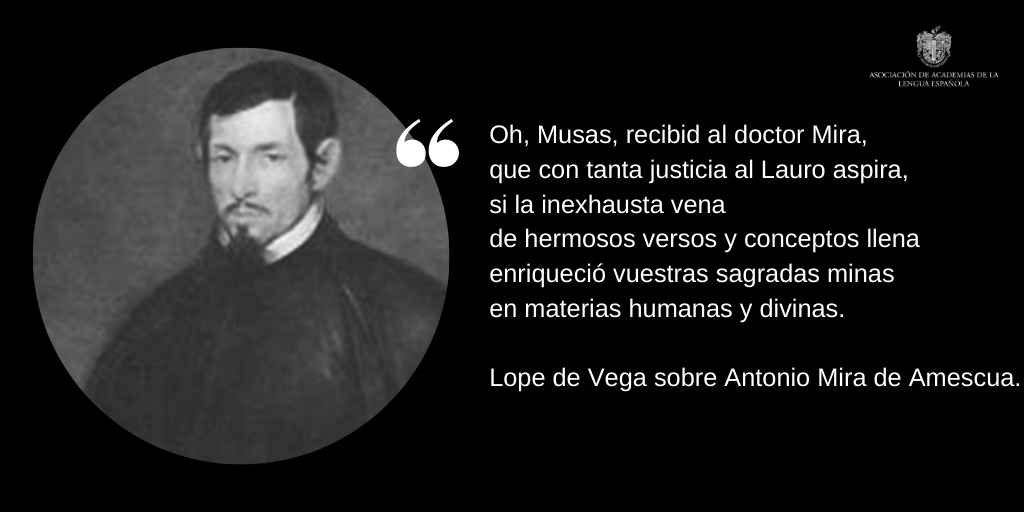
However, to be more in Madrid, he went on to serve the VII Count of Lemos, Pedro Fernández de Castro y Andrade, who chose him from a circle of illustrious poets whom he took to Naples when he was appointed viceroy. He remained there until 1606 when the Count of Lemos returned. He wanted to remain in Madrid and in 1619 became chaplain of the Cardinal-Infante Don Fernando of Austria, which led to a lot of major problems with the bishop of Granada for neglecting his Royal Chapel in his Cathedral.
However, he remained in Madrid for more than ten years and these were his most glorious years as a playwright. At the Court he also befriended Góngora, Cervantes, Tirso de Molina, Pérez de Montalbán and Calderón de la Barca, among others. Almost everyone admired him and, surprisingly, he hardly had any poetic disputes, except for one with Juan Ruiz de Alarcón, against whom he wrote the libel A un poeta Corcovado que se valió de los trabajos ajenos (To a hunchback poet who made use of other people’s works).
It is believed that for the insistence of the bishop of Granada he returned to Andalusia but exchanged his chaplaincy in Granada for an archdeaconry in his native city, Guadix, where he settled down in 1632. From then on, he lost track of himself as a playwright and only took part in poetry contests or in prologues to books by some of his poet friends. It is also documented that in his last years, whether or not because he did not dedicate himself to his true hobby, the genius in him became sour, and he had several incidents with his co-workers; He even hit the master of the cathedral of Guadix. Finally, he died on 8 September 1644 in his native city.
The oblivion into which he fell in his Golden Age is what accompanied him until the second half of the twentieth century, when his stature began to recover. The afore mentioned Agustín de la Granja, a professor at the University of Granada, has begun to publish his complete theatre works and has already published twelve volumes: sixty-six comedies and eighteen ‘Autos Sacramentales’. This has also aroused the interest of American and Italian researchers.
With the study of the style and the compilation of the dramatic works of Antonio Mira de Amescua, I invite you, dear reader, for the next anecdote.
[1] For those who are not initiated in the subject of the cleansing of blood in Baroque Spain, I have to comment that when the Jews and Arabs were expelled from Spain after the Reconquista, those who were able to stay, were required to convert to Catholicism, by a practice of forced conversion issued on February 14, 1502 by the Catholic Monarchs. But they were not called Christians, but continued to be called converted Jews, Moors, Mudéjars or even Saracens. When one of these converted families wanted to progress, they had to try to make their Arab or Jewish past be forgotten, since to gain access to important positions, especially ecclesiastical ones, it was necessary to be clean of blood, or bean old Christian. That is why it is known that bribes and perjury were frequent around these blood-cleansing files, to prove that one was an old Christian.
[2] See note 1.
[3] There is no archive that that has not been influenced by Agustín de la Granja. I can attest to this, since I have followed one of his investigations into the attribution of two Autos sacramentales: El labrador de la Mancha and El bosque de amor, which were found in anonymous manuscripts in the Spanish National Library and in the Menéndez Pelayo Library in Santander. About those contributions of this researcher all critics have had to admit that the author is Lope de Vega.
 Norton Teatro