Hola amigos de nortonteatro.blog. Yo soy Nortan Palacio, conocido artísticamente y en Spectaculo Cultuurfestival Geleen como Norton P.
Hello friends of nortonteatro.blog. I am Nortan Palacio, known artistically and in the Spectaculo Cultuurfestival Geleen, as Norton P.
Viernes 4 de Julio. 2024
ENGLISH VERSION, BELOW SPANISH VERSION.
ANÉCDOTA 108
METATEATRO EN ESPERANDO AL 2059.
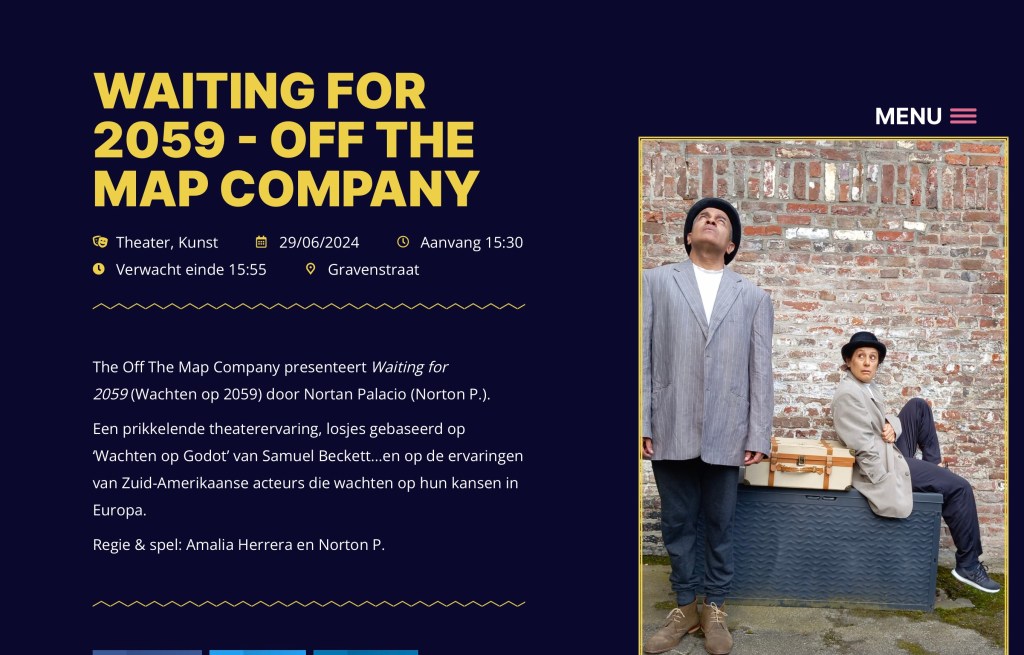
Si me sigues, querido lector, sabrás que Esperando al 2059 es una obra escrita por mí para la COMPAÑÍA TEATRAL FUERA DEL MAPA, en la que Amalia Herrera (actriz, bailarina y directora brasilero-uruguaya) y yo (de mí creo que sabrás mi historial profesional) somos alma, razón y cuerpo. Esta función se estrenó el pasado 29 de junio (2024) dentro del Spectaculo Cultuurfestival Geleen, en los Países Bajos y en ese festival se testó con cuatro funciones en las que, según el público, aprobó el test con nota alta[1].
El hecho de que la traiga a estas anécdotas se debe a que ahora estoy inmerso en presentar en este blog una serie de obras teatrales del Siglo de Oro Español en las que encontramos el recurso del meta-teatro (teatro dentro del teatro). Y esta obra, aunque no pertenece a aquella época, sí que está preñada de este recurso. También, porque cuando estaba inmerso en su proceso de creación se me ocurrió presentarte, lector, las obras con metateatro en el Siglo de Oro y, en último caso, para presumir de ella delante de ti, delante de todos.
En resumen, Esperando al 2059 empieza in medias res[2]: dos actores sudamericanos en Europa, que están a punto de estrenar en un festival callejero (la escena se desarrolla en una calle, incluso si se llegase a representar en un espacio convencional o teatro a la italiana) una versión reducida de Esperando a Godot de Samuel Beckett, pero cuando están listos para representar, aparece alguien del ayuntamiento (del sitio donde se represente), y dice que no se puede empezar puesto que ha llegado una notificación, nadie sabe de quién, y se necesita un permiso, nadie sabe de qué tipo, antes de empezar. El director del festival se va con el funcionario al ayuntamiento a solucionar el impase del permiso mientras los dos actores quedan esperando el permiso y al público (puesto que a sus ojos, todavía el público no ha llegado).
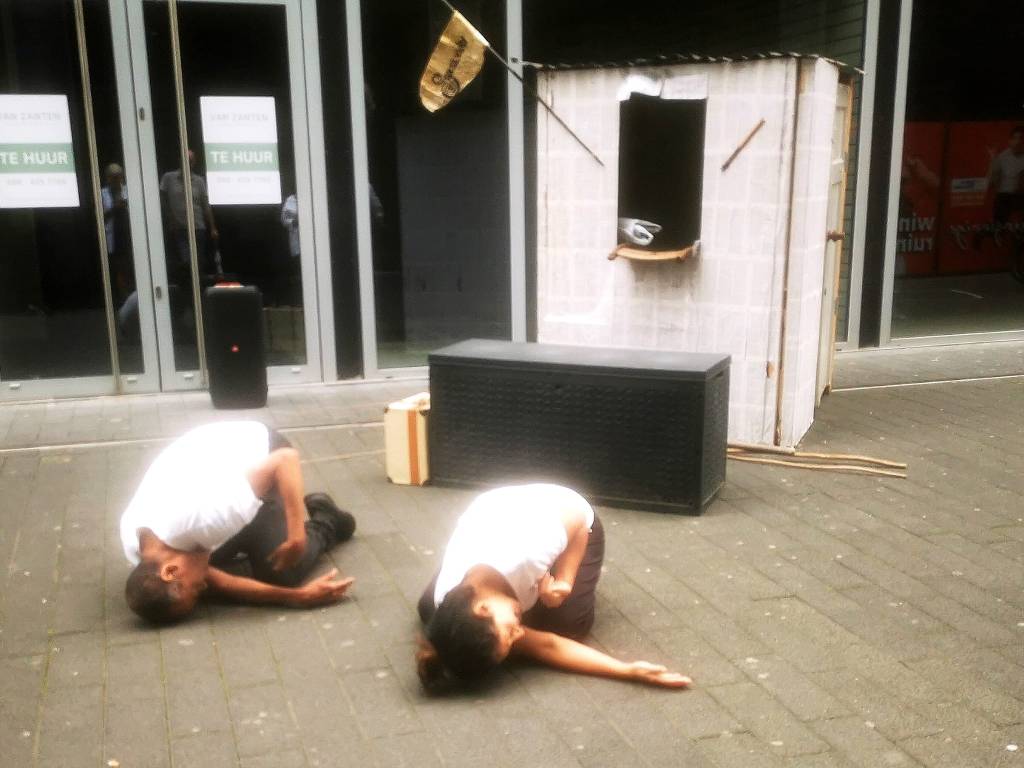
Entonces ellos están haciendo unos ejercicios de calentamiento, cuando por fin se dan cuenta de que ha llegado el público[3]. Y es en realidad cuando empieza la obra, les cuentan qué está pasando y se disculpan porque tanto ellos como el público tienen que esperar el tal permiso. Siguen haciendo sus ejercicios y como no quieren que el público se aburra deciden contarles todas sus peripecias desde su llegada a Europa, que se han limitado básicamente a actos de espera: el permiso de trabajo; las llamadas de los directores teatrales a pesar del hándicap de la lengua; el no querer trabajar como camareros; el decidirse a montar su propio espectáculo para la calle; hacer una versión reducida de Esperando a Godot; aprenderse los diálogos fonéticamente en neerlandés (si la obra se representa en otro país, se varía la lengua); esperar que los transeúntes se detengan a verlos actuar y esperar que les echen monedas en sus sombreros; pocos ‒o ninguno‒ lo hacen.
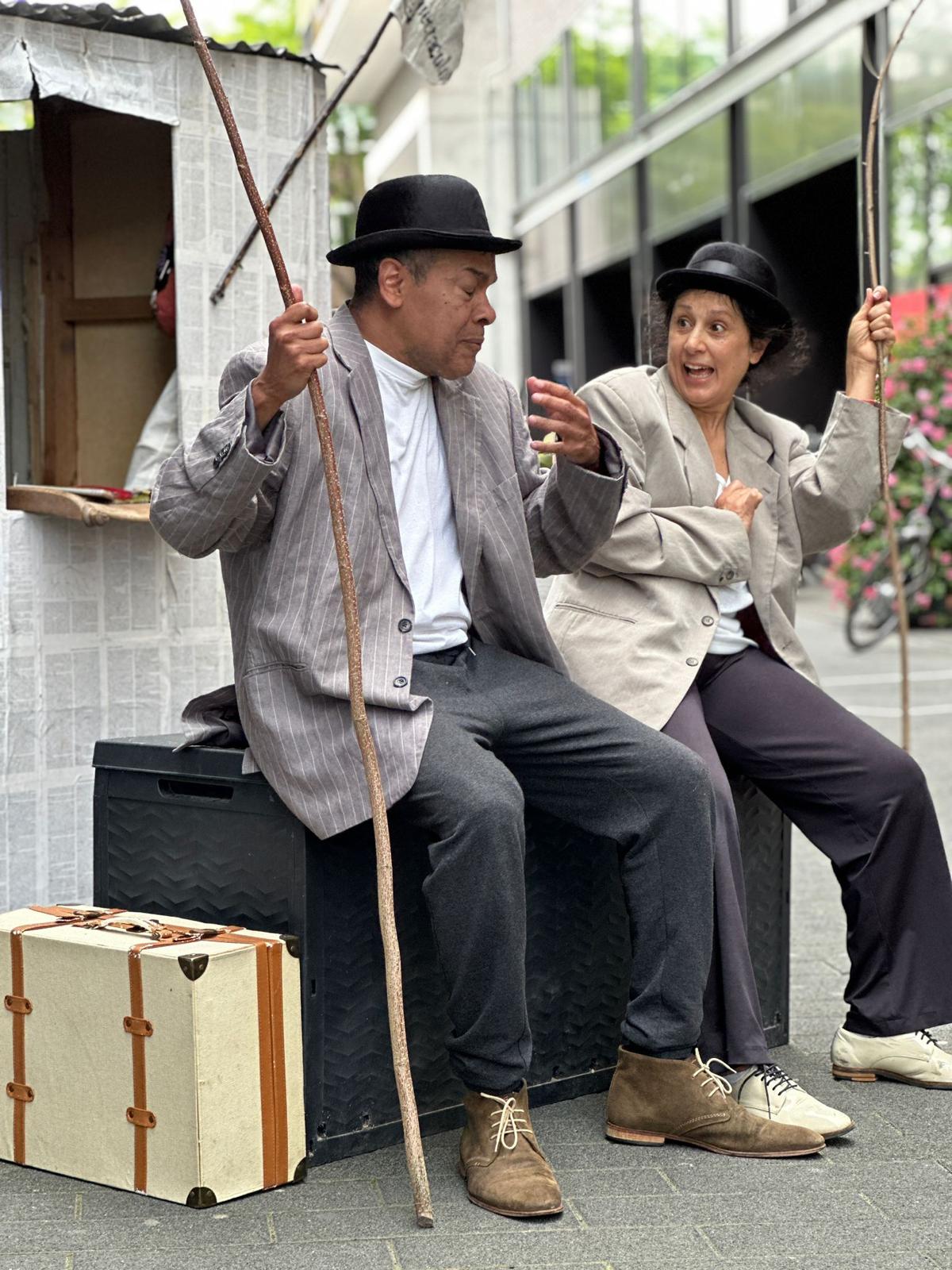
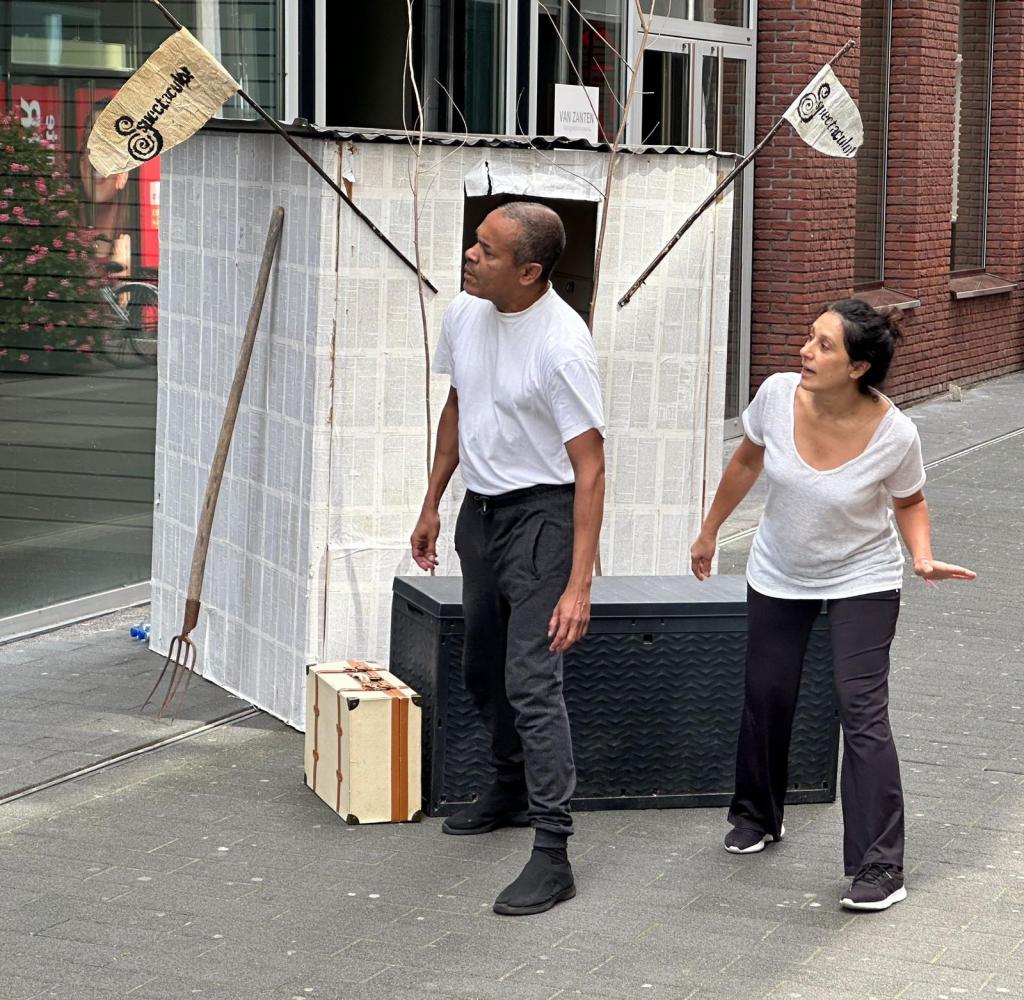
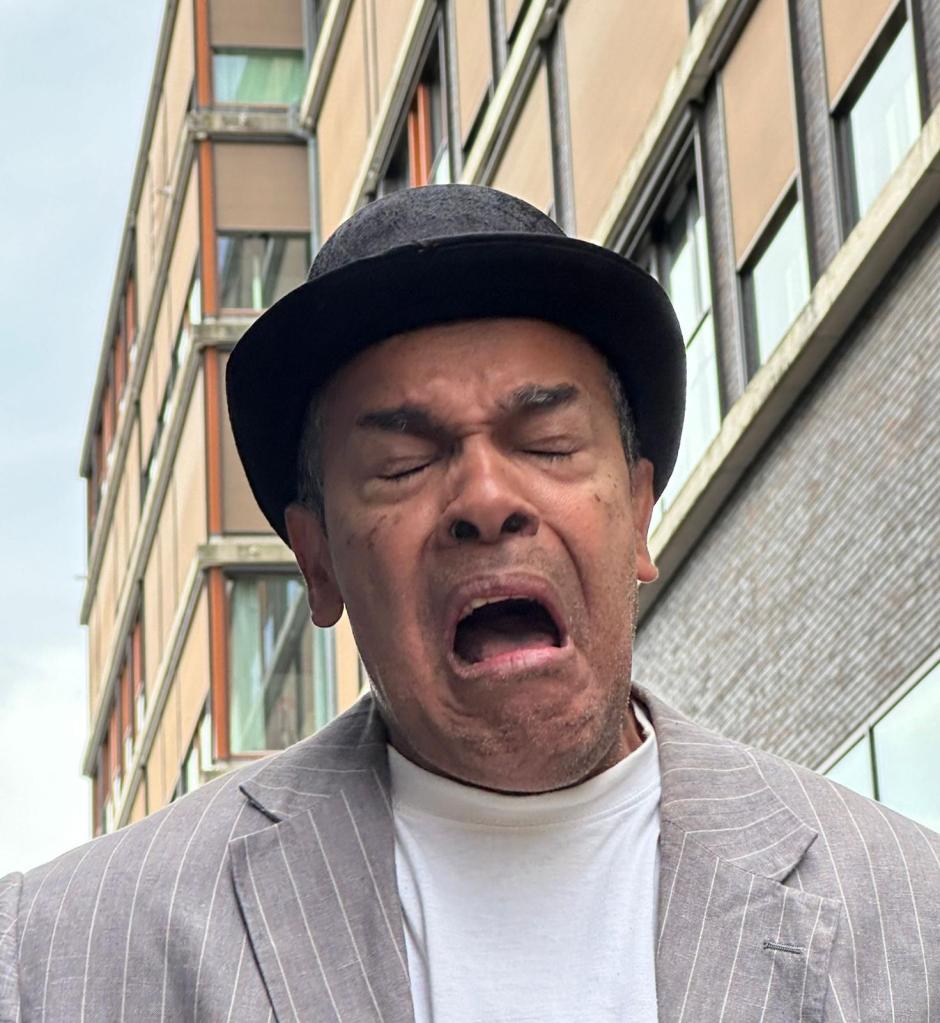
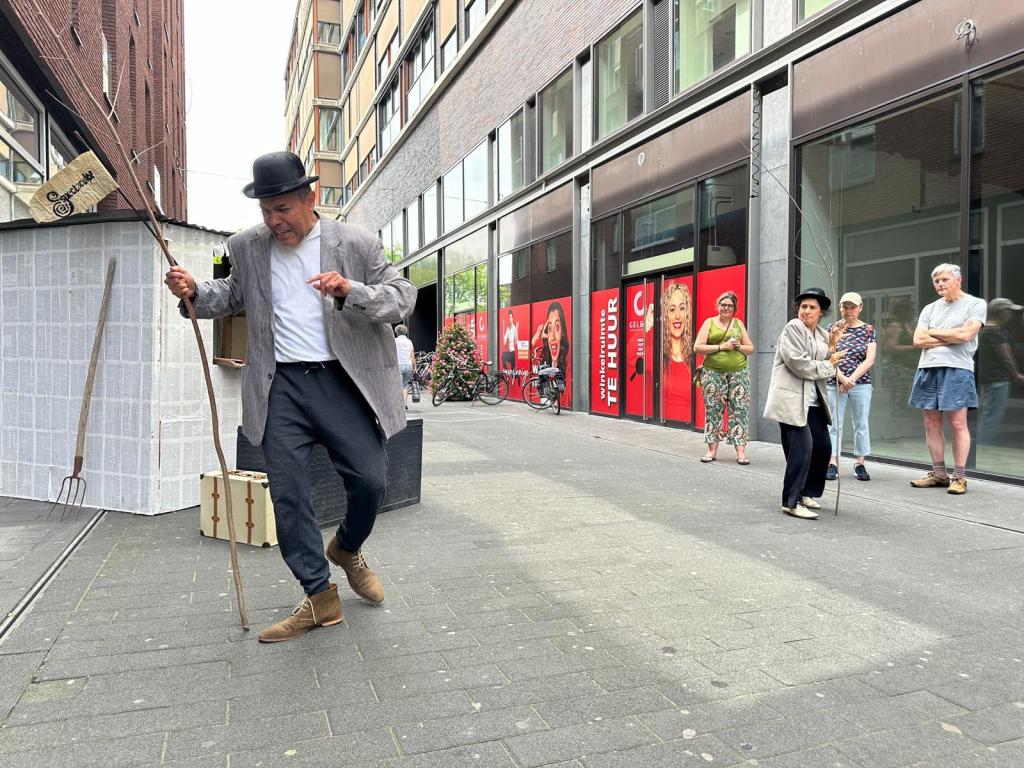
Así, hasta que cuentan que, cuando estaban a punto de tirar la toalla e ir a trabajar como camareros, apareció el director de Festival de Geleen (o de cualquier localidad donde representen) y les ofreció su primer contrato profesional; solo tienen que esperar a la fecha de inicio del festival que es este día; cuando todo está preparado para empezar la función, entonces tienen que esperar por el último y desconocido permiso.
Con todo esto, el permiso sigue sin llegar y como no saben qué más contar al público; deciden mostrarles un ensayo de una escena de Esperando a Godot (porque se supone que para ensayar no necesitan permiso), cuando la escena, en el difícil neerlandés, se está desarrollando y el público está riendo sus dificultades con la lengua; les llega un mensaje al teléfono móvil y allí se descubre por qué no podrán representar nunca esa obra hasta que los derechos de autor de Samuel Beckett expiren y eso será en el año 2059.
La causa de esa prohibición, la descubrirás si algún día vienes a vernos actuar querido lector (no queremos dejarte sin un poco de curiosidad), pero es algo que no deja indiferente a nadie.
Los dos actores sudamericanos, al ver que la espera hasta tal año es casi imposible, hacen un alegato final en el que ponen en consonancia su situación en este país de Europa, con la situación de los pobres, los refugiados, las victimas de guerras, de genocidios, etc., mientras que van desnudando su alma y despojándose del vestuario de los personajes de Beckett, hasta acabar escondidos o fuera de la vista del público, como los “nadies” esperando por…
Como ves, casi todo el tiempo, la comunicación actores-público es directa, no hay cuarta pared. Sólo cuando están mostrando el ensayo, los actores se caracterizan como personajes de Esperando a Godot y la interacción con el público varía, pero aún así, por el hecho de que todos saben que es un ensayo, la comunicación no es como en una función teatral convencional y carga toda la función de meta-teatro.
Los niveles de interacción, de realidad y de teatralidad cambian constantemente, ya que los actores se comunican entre ellos en español y en esos momento son dos personas reales; cuando les cuentan sus vicisitudes al público lo hacen en inglés y entonces esas personas reales quieren mostrar al público que son buenos actores y por eso gesticulan y hablan de forma grandilocuente; y cuando están ensayando la escena de Esperando a Godot, están actuando como los personajes ‒con el añadido de que la obra pertenece al genero del absurdo: su interpretación no tiene nada que ver con Stanivslasky y sí con Meyerhold, Grotowski, el Cabaret o el Teatro Danza.
Además, el público como ente coherente es casi un actante más en la representación. Como ves, es tal el grado de meta-teatralidad, que en algunos momentos yo lo considero (es mi apreciación) meta-meta-meta-teatralidad… y así hasta el infinito.
Nos vemos en la próxima anécdota.
[1] Si esta es la primera vez que me lees, ahora lo sabes
[2] In medias res es un término latino que significa que la narración y en este caso la función empieza en pleno asunto, en plena acción (ya han pasado muchas cosas que el público irá descubriendo según avanza la representación)
[3] Cualquier parecido con el comienzo de la obra El Público de Federico García Lorca es mera intención deliberada
ANECDOTE 108
METATHEATER IN WAITING FOR 2059.
If you follow me, dear reader, you will know that Waiting for 2059 is a play written by me for the THEATER COMPANY OFF THE MAP, in which Amalia Herrera (Brazilian-Uruguayan actress, dancer and director) and I (I think you know my professional history) are soul, reason and body. This function premiered on June 29 (2024) within the Spectaculo Cultuurfestival Geleen, in the Netherlands and at that festival it was evaluated with four performances in which, according to the public, it passed the test with a high mark[1].
The fact that I bring her to these anecdotes is due to the fact that I am now immersed in presenting in this blog a series of plays from the Spanish Golden Age in which we find the resource of meta-theater (theater within the theater). And this work, although it does not belong to that period, is impregnated with this resource. Also, because when I was immersed in its creative process it occurred to me to present to you, reader, the works with meta-theatre in the Golden Age and, in the last case, I present it in order to show it off in front of you, in front of everyone.
In short, Waiting for 2059 begins in medias res[2]: two South American actors in Europe, who are about to premiere at a street festival (the scene takes place in a street, even if it were to be performed in a conventional space or Italian-style theatre) a reduced version of Waiting for Godot of Samuel Beckett, but when they are ready to play it, someone from the city council (from the place where it is performed) appears, and says that it cannot start since a notification has arrived, no one knows from whom, and a permit is needed, no one knows what type, before starting. The director of the festival goes with the official to the town hall to solve the impasse of the permit while the two actors are waiting for the permit and the audience (since in his eyes, the audience has not yet arrived).
Then they are doing warm-up exercises, when they finally realize that the audience has arrived[3]. And it is actually when the play begins, they are told what is happening and apologize because both they and the audience have to wait for such permission. They continue to do their exercises and as they do not want the public to be bored, they decide to tell them all their adventures since their arrival in Europe, which have basically been limited to waiting acts: the work permit; the calls of theatre directors despite the handicap of language; not wanting to work as waiters; deciding to put on his own show for the street; to make a reduced version of Waiting for Godot; to learn the dialogues phonetically in Dutch (if the play is performed in another country, the language is changed); to wait for passers-by to stop to watch them perform and to expect them to put coins in their hats; few – or none – do so.
And so on, until they say that, when they were about to throw in the towel and go to work as waiters, the director of the Geleen Festival (or any town where they represent) appeared and offered them their first professional contract; they just have to wait for the start date of the festival, which is this day; When everything is ready to start the show, then they have to wait for the last and unknown permission.
With all this, the permission still does not arrive and as they do not know what else to tell the audience; they decide to show them a rehearsal of a scene from Waiting for Godot (because they are not supposed to need permission to rehearse), when the scene, in the difficult Dutch, is developing and the audience is laughing at their difficulties with the language; they receive a message on their mobile phone and there they discover why they will never be able to perform that work until Samuel Beckett’s copyrights expire and that will be in the year 2059.
The cause of this prohibition will be discovered if one day you come to see us perform dear reader (we do not want to leave you without a little curiosity), but it is something that leaves no one indifferent.
The two South American actors, seeing that waiting until such a year is almost impossible, make a final plea in which they bring their situation in this European country into line with the situation of the poor, refugees, victims of wars, genocides, etc., while they bare their souls and strip themselves of the costumes of Beckett’s characters. until they end up hidden or out of public view, like the «nobodies» waiting for…
As you can see, almost all the time, actor-audience communication is direct, there is no fourth wall. Only when they are showing the rehearsal, the actors are characterized as characters from Waiting for Godot and the interaction with the audience varies, but even so, the fact that everyone knows that it is a rehearsal, the communication is not like in a conventional theatrical performance and loads the entire function of meta-theater.
The levels of interaction, reality and theatricality are constantly changing, since the actors communicate with each other in Spanish and at that moment they are two real people; when they tell their vicissitudes to the audience they do it in English and then those real people want to show the audience that they are good actors and that is why they gesticulate and speak in a grandiloquent way; and when they are rehearsing the scene of Waiting for Godot, are acting like the characters – with the addition that the play belongs to the genre of the absurd: their interpretation has nothing to do with Stanivslasky method, but with Meyerhold, Grotowski, Cabaret or Dance Theatre.
In addition, the audience as a coherent entity is almost one more actor in the performance. As you can see, the degree of meta-theatricality is such that at times I consider it (my appreciation) meta-meta-meta-theatricality… and so on ad infinitum. See you in the next anecdote.
[1] If this is the first time you read to me, then now you know this.
[2] In medias res is a Latin term that means that the narration and in this case the performance begins in the middle of the matter, in the middle of the action (many things have already happened that the audience will discover as the performance progresses)
[3] Any resemblance to the beginning of Federico García Lorca’s El Público is merely a deliberate intention
 Norton Teatro
Enhorabuena.
Estupenda explicación. Y que siga la función.
Me alegro de que gustase
Enviado desde Outlook para Androidhttps://aka.ms/AAb9ysg
Me gustaMe gusta