Hola amigos de nortonteatro.blog. Yo soy Nortan Palacio, conocido artísticamente y en el FAUS como Norton P.
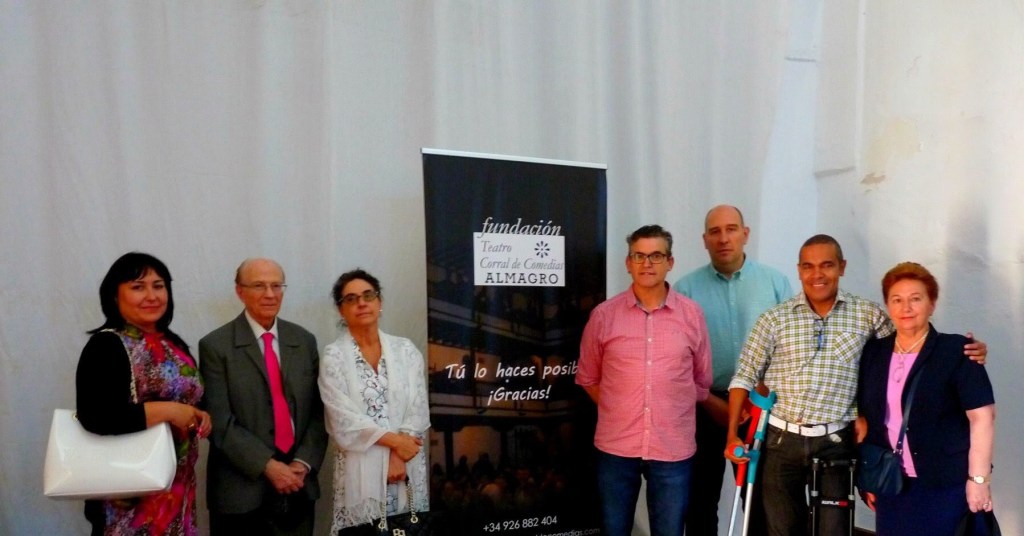
ANÉCDOTA 105
UN OBITUARIO ESCRITO DESDE ESTE SIGLO AL SIGLO DE ORO
En esta anécdota voy a exponer un obituario, publicado en la pagina web de la Asociación Internacional Siglo de Oro (AISO), que implica a tres personas muy importantes en mi formación teatral, filológica y con especialización en el Teatro del Siglo de Oro Español, pero antes explico el porqué de todo ello.
Hace unas semanas murió Enrique Rull, su viuda es Ana Suárez Miramón y el autor del obituario es Ignacio Arellano, si algún lector no sabe quiénes son estas personas, las describo: son tres de los más grandes investigadores de la literatura española, pero sobre todo de la literatura del Siglo de Oro español y muy centrados en los estudios teatrales del siglo en cuestión.
Y su importancia en mi vida profesional es la siguiente: empecé a estudiar filología hispánica, cuando ya estaba trabajando profesionalmente en el teatro (como actor y docente) porque quería hacerme ducho en el uso de la lengua y en el conocimiento de literatura. Y todo porque cuando empezaba a buscar una obra para las muestras de final de curso, nunca encontraba una que tuviese una cantidad de personajes igual al número de mis alumnos ni era posible aplicar aquella máxima de que todos los estudiantes tuviesen más o menos la misma participación en dicho montaje. Entonces tenía que buscar alguna obra que se pudiese adaptar a lo requerido y me demandaba un trabajo de versión y adaptación bastante importante, por lo que los estudios lingüístico-literarios se me hacían indispensables. Lo que no sabía era que terminaría enamorándome de todo aquello y las tres personas que hacen parte de este obituario serían fundamentales para ello.
Durante la carrera, Enrique Rull me hizo creer que el trabajo de investigación en estas materias era algo fácil, porque así lo hacía parecer él; aunque en realidad eran trabajos arduos que luego parecían fáciles porque te acababas enamorando de su forma de hacer filología y más en los estudios teatrales del Siglo de Oro: siempre palabras amables para corregir los errores de los estudiantes y siempre maneras de que lo intentaran nuevamente desde perspectivas más asequibles, hasta que obtenían la capacidad de asomarse a las investigaciones más profundas.
Al terminar la carrera, estaba tan pillado por las enseñanzas de Rull que ya sabía que quería doctorarme en algún campo de esta parte de la filología que estudiaba el Teatro del Siglo de Oro. Y aquí es donde entran en acción los otros dos personajes de esta comedia/drama.
Tengo la ventaja de vivir en La Mancha, una tierra tan literaria, no solo por el Quijote y su región, sino porque aquí se desarrollaron otras historias menos conocidas, pero no por ello menos importantes como El galán de la Membrilla de Lope de Vega o porque por aquí vivieron y murieron grandes de aquella época como Francisco de Quevedo que vivía temporadas en su señorío: La Torre de Juan Abad y que murió en Villanueva de los Infantes.
El caso es que en un congreso sobre Quevedo, en la mencionada Torre de Juan Abad, coincidí con Ignacio Arellano y Ana Suárez a quienes admiraba, precisamente porque los había descubierto para mis investigaciones, por intermedio de Enrique Rull. En este congreso tuve la osadía de acercarme a Arellano para presentarle mis aspiraciones y mis dudas sobre el tema a tratar en una hipotética tesis doctoral, y a Ana Suárez para pedirle que fuese mi directora de tesis. Ambos fueron tan amables, tan sencillos y generosos que en ese momento entendí el hecho de que la genialidad casi siempre viene acompañada de la bondad. Arellano me pidió mi dirección y me envió documentación y Ana Suárez aceptó casi sin pensárselo dirigir mi tesis.
Quien me iba a decir a mí, que tiempo después estaría doctorado y coincidiría con esos tres grandes investigadores en congresos donde yo también sería ponente y, en algunos casos, organizador. Por todo esto presento mis respetos a través de la exposición de este obituario.
Enrique Rull (†2024). Obituario, por Ignacio Arellano por AISO | May 2, 2024 | Enrique Rull, maestro y amigo
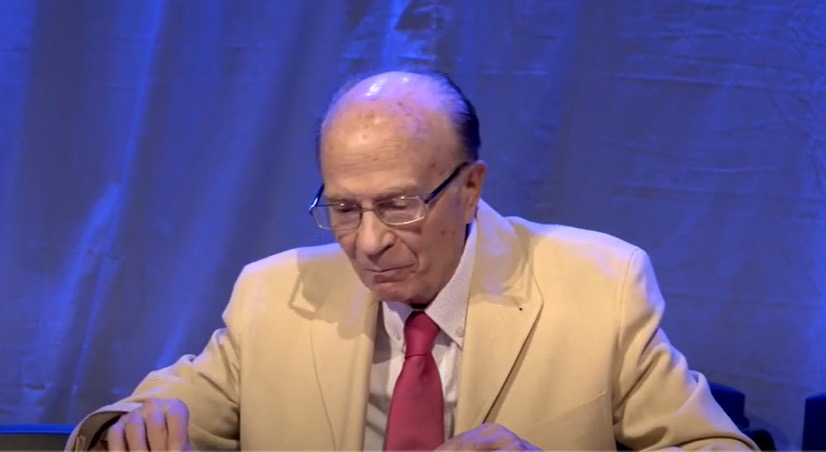
En la madrugada del 13 de febrero (2024) nos dejaba Enrique Rull. Con él se iba uno de los filólogos más importantes del siglo XX y primer cuarto del XXI, valga decir, uno de los estudiosos fundamentales en la historia general de los estudios hispánicos, sin cuya obra la inmensa literatura del Siglo de Oro y en particular la de Calderón de la Barca, serían mucho menos inteligibles. Y con el eximio filólogo se fue el amigo cordial, cuya conversación, siempre amable, sabia y refinada, cumplía, como pocas veces se hallan cumplidos, los objetivos clásicos de delectare et prodesse. Porque Enrique no solo era —lo sigue siendo en sus escritos— un maestro incomparable en lo que al Siglo de Oro se refiere, sino que su vasta cultura y su curiosidad intelectual y artística recorría los caminos del cine oriental y los múltiples acordes de un melómano excepcional… Conversar con Enrique Rull era siempre aprender sin estridencias, como si pensara, en su generosidad, que los oyentes sabían tanto como él y hasta a veces conseguía que lo creyeran. No es posible traer aquí, en este momento de su falta, todos los trabajos imprescindibles que dejó, desde su edición canónica de La vida es sueño (1981) hasta los numerosos estudios sobre Cervantes, Tirso, Lope de Vega, sin olvidar la atención prestada también a Bécquer, Larra, o Azorín. Su interés transitó por variados géneros: auto sacramental, comedias de espectáculo cortesano, entremeses, novela, zarzuela y óperas —de su afición y competencia musical dan testimonio estudios como «Cervantes y La s bodas de Camacho mendelssohnianas», 2012; o las dos entregas de «El teatro mitológico de Calderón y el drama wagneriano»—, analizó lo maravilloso en los autos calderonianos, las fuentes de distintas obras, problemas de autoría, de métrica, la naturaleza, la mitología, las transposiciones en medios expresivos distintos — como en «Cocteau: del teatro al cine a través de Orfeo»—, la cultura popular y la exquisitamente erudita… tantas aportaciones escritas con solidez y elegante estilo. No es posible, ciertamente, recorrer su dilatada contribución, pero no puedo menos que evocar —permítaseme una memoria personal— algunos trabajos suyos que fueron esenciales para quien esto escribe. Durante tres décadas el Grupo de Investigación Siglo de Oro de la Universidad de Navarra estuvo embarcado en la edición crítica de los autos sacramentales de Calderón: en esa tarea la ayuda de Enrique Rull fue insustituible. Su serie de artículos (junto con José Carlos de Torres) sobre manuscritos de los autos sacramentales fueron un punto de partida necesario; ya más tarde, incorporado al equipo como uno de sus pilares maestros, editó Psiquis y Cupido (Madrid, junto con Ana Suárez) , Psiquis y Cupido para Toledo, y, ya en el tramo final del proyecto, el último de los autos que cerró una larga etapa llena de esfuerzo y de satisfacciones: El gran teatro del mundo, que publicamos —como el volumen número 100 y último de los autos completos, en 2021, volumen que fue la última vez que me cupo el honor de colaborar con Enrique (y Ana Suárez) en una tarea calderoniana. Pero ya antes de que comenzara el mencionado proyecto, Enrique Rull, desde su magisterio en la UNED, había regalado con la enorme generosidad que lo caracterizaba, uno de los artículos más importantes que se han escrito sobre las loas —e indirectamente sobre los autos— calderonianos, a una revista que acababa de nacer en el Centro Asociado de la UNED de Pamplona, y que no tenía en ese momento ninguna relevancia científica: era una empresa que manifestaba una ilusión principiante, Notas y estudios filológicos, en cuyo segundo número (1985) apareció el trabajo de Rull «Apuntes para un estudio sobre la función teológico política de la LOA en el Siglo de Oro», trabajo seminal que revelaba que los géneros «sacramentales», lejos de estar situados en un universo fuera del tiempo y del espacio —como tantas veces de había repetido—, se insertaban en un tejido complejo en el que la dimensión «historial» servía de cimiento a la «alegórica», perspectiva absolutamente esencial para la comprensión de este tipo de obras, y que marcaría mi propia perspectiva en diversos trabajos que no hace al caso citar ahora. Sea como fuere, sin los trabajos de Enrique Rull, el proyecto al que personalmente más esfuerzo, tiempo y reflexión he dedicado en mi propia carrera, no se habría podido desarrollar, o al menos no en la medida en que lo hizo: en este momento no puedo desligar su figura como estudioso modelo para cualquier filólogo que aún respete la competencia científica y la excelencia investigadora, de la influencia y la admiración personal que siempre me complace reconocer. Enrique Rull conocía como pocos los horizontes de emisión y recepción de los textos, lo que le permitió analizar con sagacidad su inserción en el contexto histórico y los sentidos delimitados por los valores y vocabularios de ese contexto, pero cuando ponía de relieve la dimensión histórica y social de una pieza literaria o dramática, advertía también que la obra de arte debe ser mirada como tal, y que la dilucidación de las circunstancias históricas sirve a su más alta comprensión estética, como escribía en su edición crítica de Celos aun del aire matan, de Calderón de la Barca (2004), al señalar que «el contexto histórico ayuda a la comprensión del hecho estético, pero dejar de lado como algo inservible el arte de la composición, estructura, lenguaje, etc. […] significa renunciar a la visión interna del texto tan importante o más que los condicionamientos sociales y externos que han podido dar lugar a la misma».
He recordado en alguna ocasión un pasaje de Servidumbre humana de Somerset Maugham, en el que discuten sobre la tragedia clásica un presunto culto y un profesor de griego. Hallado el primero en una serie de incompetencias acude a un argumento que le parece irrebatible:
—Usted lee el griego como un profesor; yo lo leo como un poeta.
A lo que el profesor replica:
—¿Y halla usted más poesía en sus lecturas cuando no comprende lo que lee?
Enrique Rull leía los textos como un profesor y como un poeta; así veía las películas que le fascinaban; así escuchaba la música que tanto amaba. Mucho le echaremos en falta. Queda lo que escribió a disposición de los que quieren saber y aprender. Léese en el Libro de la Sabiduría que la sabiduría es un espíritu inteligente, múltiple, sutil, móvil, penetrante, inmaculado, lúcido, invulnerable, bondadoso, agudo… Por ese itinerario de la sabiduría, en el campo que le correspondió trabajar, caminó con autoridad Enrique Rull. Pocos podrán presentar al Autor, al terminar la representación en el gran teatro del mundo, una actuación tan perfecta como la suya.
Ignacio Arellano
ANECDOTE 105
AN OBITUARY WRITTEN FROM THIS CENTURY TO THE GOLDEN AGE
In this anecdote I am going to present an obituary, published on the AISO website, that involves three very important people in my theatrical and philological training and with specialization in the Theatre of the Spanish Golden Age, but first I explain the reason for all this.
A few weeks ago Enrique Rull died, his widow is Ana Suárez Miramón and the author of the obituary is Ignacio Arellano, if any reader does not know who these people are, I will describe them: they are three of the greatest researchers of Spanish literature, but especially of the literature of the Spanish Golden Age and very focused on the theatrical studies of the century in question.
And its importance in my professional life is the following: I began to study Hispanic philology, when I was already working professionally in the theater (as an actor and teacher) because I wanted to become skilled in the use of the language and in the knowledge of literature. And all because when I started looking for a work for the end-of-year exhibitions, I never found one that had a number of characters equal to the number of my students, nor was it possible to apply that maxim that all students had more or less the same participation in that production. At that time, I had to look for a work that could be adapted to what was required, and it required me to do a lot of work to do in terms of version and adaptation, so linguistic-literary studies were indispensable to me. What I didn’t know was that I would end up falling in love with all of that and the three people who are part of this obituary would be fundamental to it.
During my degree, Enrique Rull made me believe that research work in these matters was easy, because that’s how he made it seem; although in reality they were arduous jobs that later seemed easy because you ended up falling in love with their way of doing philology and even more so in the theatrical studies of the Golden Age: always kind words to correct the mistakes of the students and always ways for them to try again from more accessible perspectives, until they obtained the ability to look at the most in-depth investigations.
At the end of my degree, I was so caught up in Rull’s teachings that I already knew that I wanted to get a doctorate in some field of this part of the philology that the Golden Age Theatre was studying. And this is where the other two characters in this comedy/drama come in.
I have the advantage of living in La Mancha, such a literary land, not only because of Don Quixote and its region, but also because other lesser-known stories were developed here, but no less important, such as El galán de la Membrilla by Lope de Vega or because greats of that time lived and died here, such as Francisco de Quevedo, who lived for periods in his lordship: The Tower of Juan Abad and who died in Villanueva de los Infantes.
The fact is that at a conference on Quevedo, in the aforementioned Juan Abad Tower, I met Ignacio Arellano and Ana Suárez whom I admired, precisely because I had discovered them for my research, through Enrique Rull. At this congress I had the audacity to approach Arellano to present my aspirations and my doubts about the topic to be dealt with in a hypothetical doctoral thesis, and to Ana Suárez to ask her to be my thesis supervisor. They were both so kind, so simple, and generous that in that moment I understood the fact that genius almost always comes with kindness. Arellano asked me for my address and sent me documentation and Ana Suárez agreed almost without hesitation to supervise my thesis.
Who would have thought that some time later I would be doing my PhD and I would coincide with those three great researchers in congresses where I would also be a speaker and, in some cases, an organizer. For all these I pay my respects through the exposition of this obituary.
Enrique Rull (†2024). Obituary, by Ignacio Arellano by AISO | May 2, 2024 |Enrique Rull, teacher and friend
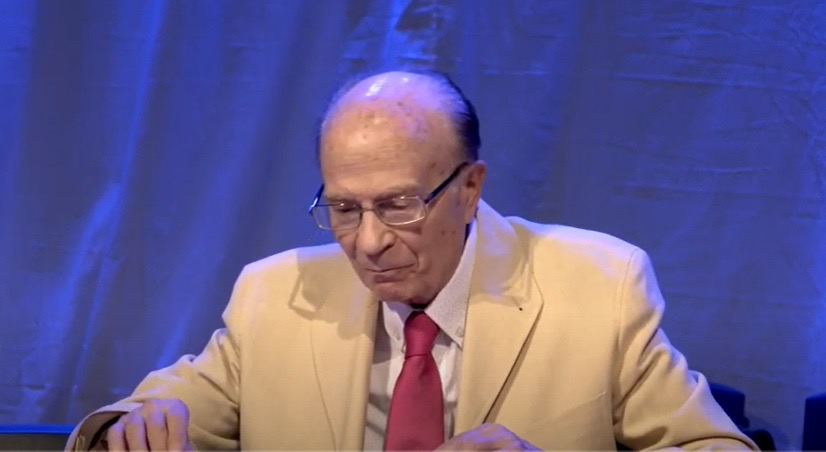
In the early hours of February 13 (2024) Enrique Rull left us. With him went one of the most important philologists of the 20th century and first quarter of the 21st, that is to say, one of the fundamental scholars in the general history of Hispanic studies, without whose work the immense literature of the Golden Age, and in particular that of Calderón de la Barca, would be much less intelligible. And with the eminent philologist went the cordial friend, whose conversation, always kind, wise, and refined, fulfilled, as they are seldom accomplished, the classical objectives of delectare et prodesse. Because Enrique was not only – and still is in his writings – an incomparable master as far as the Golden Age is concerned, but his vast culture and his intellectual and artistic curiosity followed the paths of oriental cinema and the multiple chords of an exceptional music lover… To converse with Enrique Rull was always to learn without stridency, as if he thought, in his generosity, that the listeners knew as much as he did and sometimes even managed to get them to believe him. It is not possible to bring here, at this time of his absence, all the essential works he left behind, from his canonical edition of Life is a Dream (1981) to the numerous studies on Cervantes, Tirso, Lope de Vega, without forgetting the attention also paid to Bécquer, Larra, or Azorín. His interest went through various genres: auto sacramental, courtly show comedies, hors d’oeuvres, novels, zarzuela and operas —studies such as «Cervantes y La bodas de Camacho mendelssohnianas», 2012; or the two installments of «Calderón’s Mythological Theatre and Wagnerian Drama»—, he analysed the marvellous in Calderon’s autos, the sources of different works, problems of authorship, of metrics, nature, mythology, transpositions in different expressive media – as in «Cocteau: from theatre to cinema through Orpheus» – popular culture and the exquisitely erudite… so many contributions written with solidity and elegant style. It is certainly not possible to go through his extensive contribution, but I cannot help but evoke — allow me a personal memoir — some of his works that were essential for this writer. For three decades, the Golden Age Research Group of the University of Navarra was engaged in the critical edition of Calderón’s sacramental autos: in this task the help of Enrique Rull was irreplaceable. His series of articles (with José Carlos de Torres) on manuscripts of the autos sacramentales were a necessary starting point; Later, incorporated into the team as one of its master pillars, he edited Psyche and Cupid (Madrid, together with Ana Suárez), Psyche and Cupid for Toledo, and, in the final stretch of the project, the last of the autos that closed a long period full of effort and satisfaction: El gran teatro del mundo, which we publish —as the 100th and last volume of the complete autos, in 2021, a volume that was the last time I had the honor of collaborating with Enrique (and Ana Suárez) on a Calderonian task. But even before the aforementioned project began, Enrique Rull, from his teaching at the UNED, had given one of the most important articles that have been written about the praises —and indirectly about the cars— of Calderon, to a magazine that had just been born in the Associated Center of the UNED in Pamplona, with the enormous generosity that characterized him. and that it had no scientific relevance at the time: it was an undertaking that manifested a beginner’s illusion, Notes and Philological Studies, in whose second issue (1985) appeared Rull’s work «Notes for a Study on the Theological-Political Function of the LOA in the Golden Age», a seminal work that revealed that the «sacramental» genres, Far from being situated in a universe outside of time and space—as I had so often repeated—they were inserted into a complex fabric in which the «historical» dimension served as the foundation for the «allegorical» one, a perspective that is absolutely essential for the understanding of this type of work, and which would mark my own perspective in various works that it is not necessary to mention here. Be that as it may, without the work of Enrique Rull, the project to which I have personally devoted the most effort, time and reflection in my own career, would not have been able to develop, or at least not to the extent that it did: at this moment I cannot separate his figure as a model scholar for any philologist who still respects scientific competence and research excellence. of the influence and personal admiration that I am always pleased to acknowledge. Enrique Rull knew like few others the horizons of emission and reception of texts, which allowed him to astutely analyze their insertion in the historical context and the meanings delimited by the values and vocabularies of that context, but when he highlighted the historical and social dimension of a literary or dramatic piece, he also warned that the work of art must be seen as such. and that the elucidation of historical circumstances serves his highest aesthetic understanding, as he wrote in his critical edition of Calderón de la Barca’s Jealousy Even of the Air Kill (2004), when he pointed out that «the historical context helps to understand the aesthetic fact, but to leave aside the art of composition as something useless, structure, language, etc. […] means renouncing the internal vision of the text as important or more important than the social and external conditioning that may have given rise to it.»
I have been reminded of a passage from Somerset Maugham’s Human Servitude, in which a presumed cult and a Greek teacher discuss classical tragedy. Finding the former in a series of incompetences, he resorts to an argument that seems irrefutable to him:
«You read Greek like a professor; I read him as a poet.
To which the professor replies:
«And do you find more poetry in your readings when you don’t understand what you’re reading?» Enrique Rull read the texts like a teacher and a poet; That’s how he watched the movies that fascinated him; That’s how I listened to the music I loved so much. He will be sorely missed. What he wrote remains available to those who want to know and learn. Let us read in the Book of Wisdom that wisdom is an intelligent, multiple, subtle, mobile, penetrating, immaculate, lucid, invulnerable, kind, sharp spirit… On this path of wisdom, in the field that he had to work, Enrique Rull walked with authority. Few will be able to present to the Author, at the end of the performance in the great theatre of the world, a performance so perfect as his.
Ignacio Arellano
 Norton Teatro
Bonito homenaje!!! ________________________________
Me gustaMe gusta