
Hola amigos de nortonteatro.blog. Yo soy Nortan Palacio conocido artísticamente, y en la biblioteca de mi casa, como Norton P.
Viernes 16 febrero 2024.
ENGLISH VERSION: BELOW SPANISH VERSION
ANÉCDOTA 98
LOS DRAMATURGOS SEGUNDONES EN EL SIGLO DE ORO ESPAÑOL:
LUIS BELMONTE BERMÚDEZ II
Comienzo esta anécdota, querido lector, pidiéndote disculpas puesto que la semana pasada me dejaba en el tintero un hecho de la biografía de Luis Belmonte Bermúdez que, al ser este un mentidero (sitio de chismorreo), no me perdono. Y es que las fuentes virtuales que utilicé para contarte su biografía (en ese momento solo disponía de ese tipo de material): Diccionario Biográfico de la Real Academia de la Historia, Biblioteca Virtual Cervantes y la Wikipedia (sí, lo confieso)[1], no registraban este hecho.
Cuando pude volver a las fuentes (mi biblioteca en casa); repasando mi material físico, casualmente encontré la mencionada anécdota en la introducción de una edición de la obra de Belmonte Bermúdez titulada: El diablo predicador y mayor contrario amigo, cuyo editor es mi amigo Fernando Gómez Cabia, al que ya mencionaba cuando hablé en el blog de las obras de Álvaro Cubillo de Aragón (Anécdota 94); allí señalaba que Gómez Cabia hace unas ediciones particulares[2], precisamente de obras de los autores llamados segundones. Pero vamos a la anécdota que dejé en el tintero, que sé que en este momento te tengo en ascuas.
Como dije en la anécdota pasada, Belmonte Bermúdez, después de su periplo por tierras mexicanas y peruanas regresó a su Sevilla natal a intentar ganarse la vida como poeta y dramaturgo, pero como el «negocio» estaba en Madrid, fue a buscar fortuna allí y pasó rápidamente al círculo de amigos y pupilos de Lope de Vega. Lo que no te conté fue que, según Gómez Cabia: en esos mismos tiempos (1619) Belmonte entró al servicio del Conde de Villamediana quién también quería despuntar como poeta y dramaturgo, pero como quizá sus andanzas nobles y amorosas[3] no le dejaban mucho tiempo, contrató a Belmonte Bermúdez como «negro». Para los que no estén relacionados con este término desde el punto de vista literario les diré que se llama «negro» a quien en la sombra escribe las obras de un autor reconocido, para que este las presente como suyas.
El caso es que una de las comedias escritas por Belmonte Bermúdez debía representarse en el Palacio Real ante los reyes como si la hubiera escrito el Conde de Villamediana. Pero el conde, que además tenía un romance con la Reina, antes de hacerla representar le agregó un texto en el que se revelaba que Felipe IV tenía amores con una cortesana. Todo esto sería una treta de Villamediana para darle a la Reina una coartada o una excusa para que continuara su relación con él, ya que el Rey no podía reclamar pues andaba en las mismas. Felipe IV se hizo el sordo y ciego, pero cuando a los tres meses Villamediana apareció asesinado en una calle de Madrid, todo el mundo en la Corte pensó que había sido una venganza del Rey. No obstante, como era vox populi que el que realmente escribía las comedias de Villamediana era Belmonte Bermúdez todas las miradas se volvieron a él y tuvo que pasar a la clandestinidad.
Por eso al año siguiente cuando escribió e hizo representar El Diablo predicador y el mayor contrario amigo, Belmonte lo hizo sin nombre de autor, por lo que cuando la obra tuvo un gran e inesperado éxito en los corrales tuvo que callar, incluso cuando se la atribuían a otros autores. Solo treinta años después, muerto ya Belmonte Bermúdez, se imprimió esta comedia con su nombre. Gómez Cabia dice que esta anécdota da material para una novela. Y yo le doy la razón.

Ahora sí, veamos algunos rasgos de la obra de Belmonte Bermúdez, hay que decir que hoy en día se conservan unas treinta comedias, aunque se cree que debió haber escrito más. De entre las de capa y espada y de disparate destacan: El acierto en el engaño y robador de su honra, Afanador el de Utrera, Amor desafiado, Casarse sin hablarse, El desposado por fuerza, Sancha la bermeja. De tema mitológico, religioso o histórico las más conocidas son: El cerco de Sevilla por el rey don Fernando, El mejor tutor es Dios, El príncipe villano, Las siete estrellas de Francia, Los trabajos de Ulises. Aunque escribió bastantes más en colaboración con otros autores de los mas granados de su momento.
También conocemos dos Autos Sacramentales: Las bodas de Fineo y La fiesta de los mártires.
Entre los entremeses los más conocidos, y algunos todavía representados hoy, tenemos: Lo que pasa en una venta, El Rollo, La maestra de Gracias y el escrito para Juan rana: Una rana hace ciento.
Pero la más destacada de todas sus obras es la ya mencionada: El diablo predicador y mayor contrario amigo, porque la forma en que trata su tema, supuestamente religioso, no tiene muchos precedentes en la época, además se sale del cauce de las propias obras de Belmonte Bermúdez, a quien se tiene por un seguidor a ultranza de Lope de Vega.
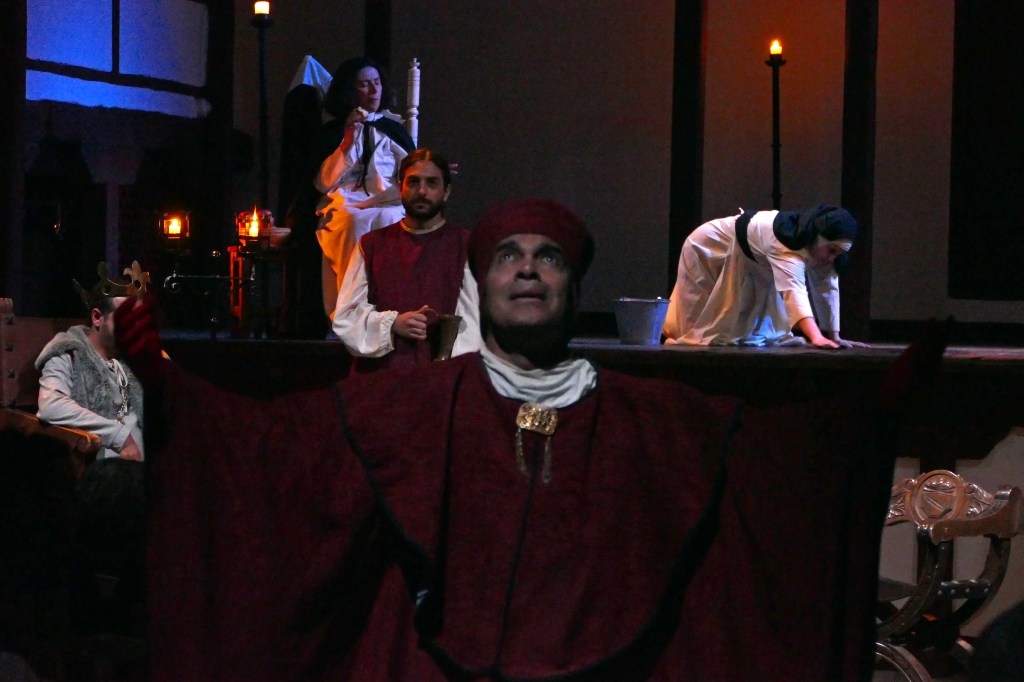
el resumen sería el siguiente: Unos frailes Franciscanos han fundado un convento nuevo; el Diablo (Luzbel)[4], lleno de odios y envidias, quiere matarlos de hambre: boicotea las limosnas y hace que las gentes del pueblo y su mandamás (un cacique clasista y machista, señorito por antonomasia) los odien. Pero Dios se apiada de los frailes y obliga a Luzbel a que les sirva y favorezca, por lo que debe hacerse pasar por uno de ellos: Fray Forzado. Al principio el demonio cumple su obligación «forzadamente» pero luego se va dando en él una inesperada conversión en la que hasta le coge el gusto a eso de hacer el bien, recibir albricias y ser alguien admirado; llegando a hacer sentir celos al propio Dios. Un sindiós, como dice Gómez Cabia, quien además añade:
«Una comedia muy divertida que encubre un grito de dolor ante la injusticia. No es de extrañar que esta obra tuviera problemas con la inquisición. Ni que llegara viva al siglo XIX y que fuera representada en las Comunas de Andalucía, nacidas con las primeras ocupaciones de tierras de los señoritos»
Como ves, amigo lector, cada vez nos encontramos con sorpresas agradables con los temas que trato en este blog; yo el primer sorprendido.
Y pues que no te quiero cansar, me despido: hasta la próxima anécdota.
[1] Si se lee con cuidado resulta muy interesante, yo diría que indispensable. Repito: si la sabes leer, si la comparas, si la cuestionas, si enriqueces lo que ella te dice.
[2] Fernando Gómez Cabia, como un quijote particular está lanzando una colección de obras teatrales del Siglo de Oro llamada: La ínsula de las Comedias, con una modesta editorial, pero ubicada en Almagro y que se distribuye en una tienda ubicada justo al lado del Corral de Comedias de dicha ciudad (todo no son más que reminiscencias quijotescas y teatrales, no se puede pedir más). Él mismo dice que son ediciones «para leer o para representar». De hecho en sus ediciones lo que hace Gómez Cabia es, respetando mucho los textos originales, añadirle a cada escena o párrafo unas acotaciones muy precisas para que cualquier director, cualquier profesor de secundaria o universitario, cualquier coordinador de grupos teatrales que necesite obras del Siglo de Oro, pero que no las entienda en una primera (o segunda) lectura, con estas acotaciones entienda el sentido más cercano a lo que el autor quiso decir y que tenga mucho del trabajo de dirección adelantado. Tengo que reconocer que al principio no creía mucho en esta idea, pero debido a la insistencia y el entusiasmo de Gómez Cabia, decidí leerlas y debo decir que el trabajo que hace este doctor en Teoría de la Literatura es realmente impresionante. Si alguien anda a la caza de obras teatrales para montar con sus estudiantes o actores este es un buen lugar: lainsuladelascomedias@gmail.com
[3] De las andanzas poéticas y amorosas de Villamediana te hablé, lector, en este blog cuando estudiábamos los modelos vivos en los que pudo basarse Tirso de Molina para escribir el personaje (mito) de don Juan Tenorio de su obra El burlador de Sevilla: ver anécdota 42.
[4] Para esta sinopsis sigo muy de cerca a Fernando Gómez Cabia en la introducción a su edición de la obra.
ANECDOTE 98
SECOND-RATE PLAYWRIGHTS IN THE SPANISH GOLDEN AGE:
LUIS BELMONTE BERMÚDEZ II
I want to begin this anecdote, dear reader, by apologizing to you because last week I left in the inkwell a fact from the biography of Luis Belmonte Bermúdez that, being a liar (gossip site), I do not forgive myself. And the fact is that the virtual sources I used to tell you about his biography (at that time I only had that type of material): Biographical Dictionary of the Royal Academy of History, Cervantes Virtual Library and Wikipedia (yes, I confess), [1]did not record this fact.
When I was able to return to the sources (my library at home), reviewing my physical material, I happened to find the aforementioned anecdote in the introduction of an edition of Belmonte Bermúdez’s work entitled: El diablo predicador y mayor contrario amigo (The Devil Preacher and Greatest Contrary Friend), whose editor is my friend Fernando Gómez Cabia, whom I already mentioned when I spoke in the blog about the works of Álvaro Cubillo de Aragón (Anecdote 94); there I pointed out that Gómez Cabia makes some particular [2]editions, precisely from the works of the so-called seconded playwrights. But now I pass to the anecdote that I left in the inkwell, that I know that at this moment I have you on tenterhooks.
As I said in the last anecdote, Belmonte Bermúdez, after his journey through Mexican and Peruvian lands, returned to his native Seville to try to earn a living as a poet and playwright, but as the «business» was in Madrid, he went to seek his fortune there and quickly passed into the circle of friends and pupils of Lope de Vega. What I didn’t tell you was that, according to Gómez Cabia: at that same time (1619) Belmonte entered the service of the Count of Villamediana who also wanted to stand out as a poet and playwright, but as perhaps his noble and amorous adventures[3] did not leave him much time, he hired Belmonte Bermúdez as a «negro». For those who are not related to this term from the literary point of view, I will tell you that a «negro» is the one who writes in the shadows the works of a well-known author, so that the well-known author can present them as his own.
The fact is that one of the comedies written by Belmonte Bermúdez was to be performed in the Royal Palace in front of the king and queen, as if this play had been written by the Count of Villamediana. But the count, who also had an affair with the Queen, before the play added a text in which it was revealed that Philip IV had affairs with a courtesan. All this would be a ruse by Villamediana to give the Queen an alibi or an excuse to continue her relationship with him, since the King could not complain because he was in the same situation. Philip IV pretended to be deaf and blind, but when three months later Villamediana was found murdered in a street in Madrid, everyone at Court thought it had been a revenge by the King. However, as it was vox populi that the one who really wrote Villamediana’s comedies was Belmonte Bermúdez, all eyes turned to him, and he had to go underground.
That is why the following year when he wrote and sold to a theatre Company for performed El diablo predicador y mayor contrario amigo (The Devil Preacher and Greatest Contrary Friend), Belmonte did so without the name of the author, so that when the play had a great and unexpected success in the corrals he had to keep quiet, even when it was attributed to other authors. It was only thirty years later, after Belmonte Bermúdez’s death, that this comedy was printed with his name. Gómez Cabia says that this anecdote provides material for a novel. And I agree with him.

Now, let’s look at some features of Belmonte Bermúdez’s work, it must be said that today there are about thirty comedies, although it is believed that he must have written more. Among the swashbuckling and absurd works, the following stand out: El acierto en el engaño y robador de su honra (The Success in Deception and Stealer of His Honor), Afanador el de Utrera, Amor desafiado, Casarse sin hablarse, El desposado por fuerza, Sancha la bermeja. The best known from mythological, religious or historical themes: The Siege of Seville by King Ferdinand, The Best Tutor is God, The Villainous Prince, The Seven Stars of France, The Works of Ulysses. Although he wrote many more in collaboration with other authors of the greatest of his time.
We also know two Autos Sacramentales: The Marriage of Phineus and The Feast of the Martyrs.
Among the best known entremeses, and some still represented today, we have: Lo que pasa en una venta, El Rollo, La maestra de Gracias and the one written for Juan rana: Una rana hace ciento.
But the most outstanding of all his works is the one that I already mentioned: The Devil Preacher and Greatest Contrary Friend, because the way in which he treats his subject, supposedly religious, does not have many precedents at that time, and it also goes out of the way of the works of Belmonte Bermúdez, who is considered a staunch follower of Lope de Vega.
The summary would be as follows: Some Franciscan friars have founded a new convent; the Devil (Luzbel),[4] full of hatred and envy, wants to starve them to death: he boycotts alms and makes the townspeople and their boss (a classist and macho cacique, lord par excellence) hate them. But God takes pity on the friars and forces Luzbel to serve and help them, so he must pretend to be one of them: friar Forced. At first, the devil fulfills his obligation «forcefully» but then an unexpected conversion takes place in him in which he even takes a liking to doing good, receiving good tidings and being admired; to the point of making God himself jealous. Gómez Cabia also adds:
«A very funny comedy that conceals a cry of pain in the face of injustice. Not surprisingly, this work had problems with the Inquisition. Nor that it reached the nineteenth century alive and that it was represented in the Communes of Andalusia, born with the first occupations of land by the lords.»
As you can see, dear reader, every time we find pleasant surprises with the topics I deal with in this blog; I was the first one surprised.
And since I don’t want to tire you, I’ll say goodbye: until the next anecdote.
[1] If read carefully, it is very interesting, I would say indispensable. I repeat: if you know how to read it, if you compare it, if you question it, if you enrich what it tells you.
[2] Fernando Gómez Cabia, like a particular Don Quixote, is launching a collection of theatrical works of the Golden Age called: La insula de las Comedias, with a modest publishing house, but located in Almagro and which is distributed in a store located right next to the Corral de Comedias of that city (everything is nothing more than quixotic and theatrical reminiscences). He himself says that they are editions «to read or to represent». In fact, in his editions, what Gómez Cabia does is, with great respect for the original texts, to add very precise annotations to each scene or paragraph so that any director, any secondary or university teacher, any coordinator of theatre groups who needs works from the Golden Age, but who does not understand them in a first (or second) reading, with these remarks, they understand the sense closest to what the author wanted to say, and that has a lot of the work of advanced direction. I have to admit that at first, I didn’t believe much in this idea, but due to the insistence and enthusiasm of Gómez Cabia, I decided to read them and I must say that the work done by this Phd in Literary Theory is really impressive. If someone is on the hunt for plays to put on with their students or actors, this is a good place: lainsuladelascomedias@gmail.com
[3] I told you about Villamediana’s poetic and amorous adventures, reader, in this blog when we were studying the living models on which Tirso de Molina could have based himself to write the character (myth) of Don Juan Tenorio in his work El burlador de Sevilla: see anecdote 42.
[4] For this synopsis I follow very closely to Gómez Cabia in the introduction to his edition of the work.
 Norton Teatro
Enhorabuena… Y el uso de la Wiki… Pues normal. Para un primer acercamiento es buen aprendizaje. Gracias por profundizar y superar las fuentes, como siempre
Enviado desde Outlook para Androidhttps://aka.ms/AAb9ysg ________________________________
Me gustaLe gusta a 1 persona