
Hola amigos de nortonteatro.blog. Yo soy Nortan palacio, conocido artísticamente y en los coros de Aristófanes, como Norton P.
Hello friends of nortonteatro.blog. I am Nortan palacio, known artistically and in the Aristófane’s chorus, as Norton P.
Viernes 9 de marzo 2024.
ENGLISH VERSION BELOW SPANISH VERSION.
ANÉCDOTA 101
SEGUIMOS CON LISÍSTRATA.
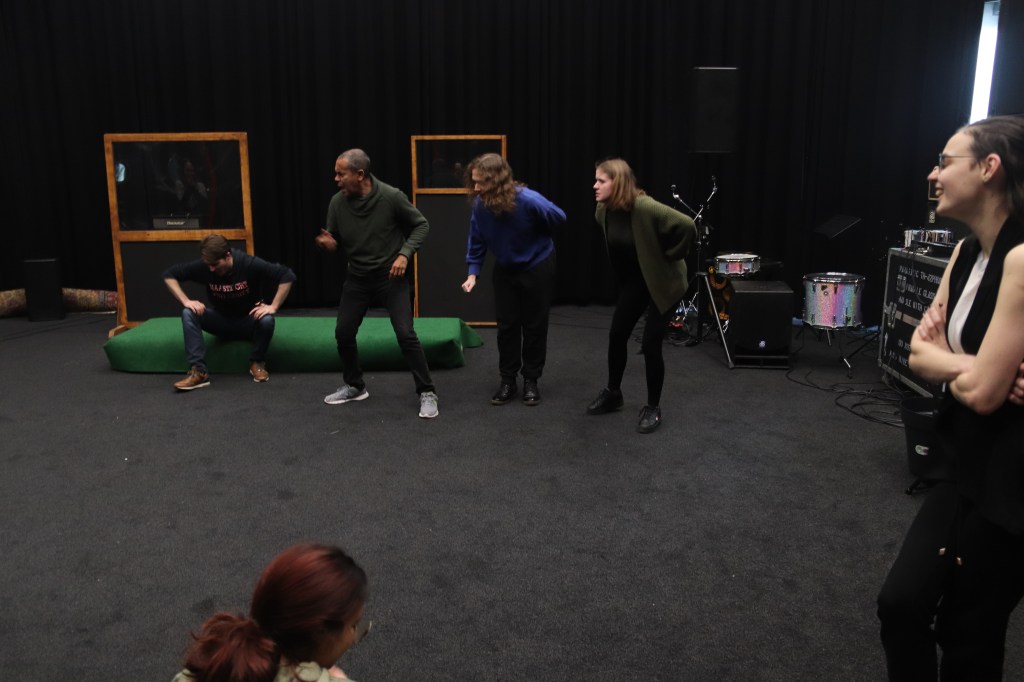
Esta semana seguiré hablando de Lisístrata, aunque esta vez te hablaré de la versión que realizamos Frida Roper, directora de producción de Alles is Drama, y yo. Antes de nada tengo que decirte que Alles is Drama es una asociación de teatro estudiantil, que depende de la Universidad de Maastricht y también recibe ayuda económica del Ayuntamiento. Sus miembros, estudiantes de dicha universidad, no son profesionales, pero sí que aman esta profesión y eso se nota en todas las actividades que realizan cada año: estrenan tres producciones y convocan talleres de teatro, de cine, de lectura, de escritura teatral, etc. Para los cuales sí que contratan directores o docentes profesionales, ya que tanto la Universidad como el Ayuntamiento así lo exigen, para seguir aportando las subvenciones.
Lo primero que hay que tener en cuenta cuando realizas una versión de una obra en la que los actores son amantes del teatro, pero que no se decían a esto de forma profesional, es que casi todos los que se presentan a la audición, y los que luego son elegidos, quieren tener personajes relevantes por lo que hay que tener mucho tacto a la hora de otorgar los personajes, pero sobre todo a la hora de distribuir los diálogos. Es difícil explicarles que no hay personajes pequeños, sino actores pequeños.
Como te conté la semana pasada, Lisístrata es una obra griega que tiene dos coros y por lo tanto debíamos elegir muchos actores, pero ya sabes a nadie (no profesional) le gusta ser miembro del coro[1], porque creen que son papeles que en la jerga teatral denominamos «comparsa». Así que la primera decisión que tomamos fue que distribuiríamos los diálogos del Corifeo[2], entre los miembros del coro y así todos tendrían más o menos la misma cantidad de versos individuales.
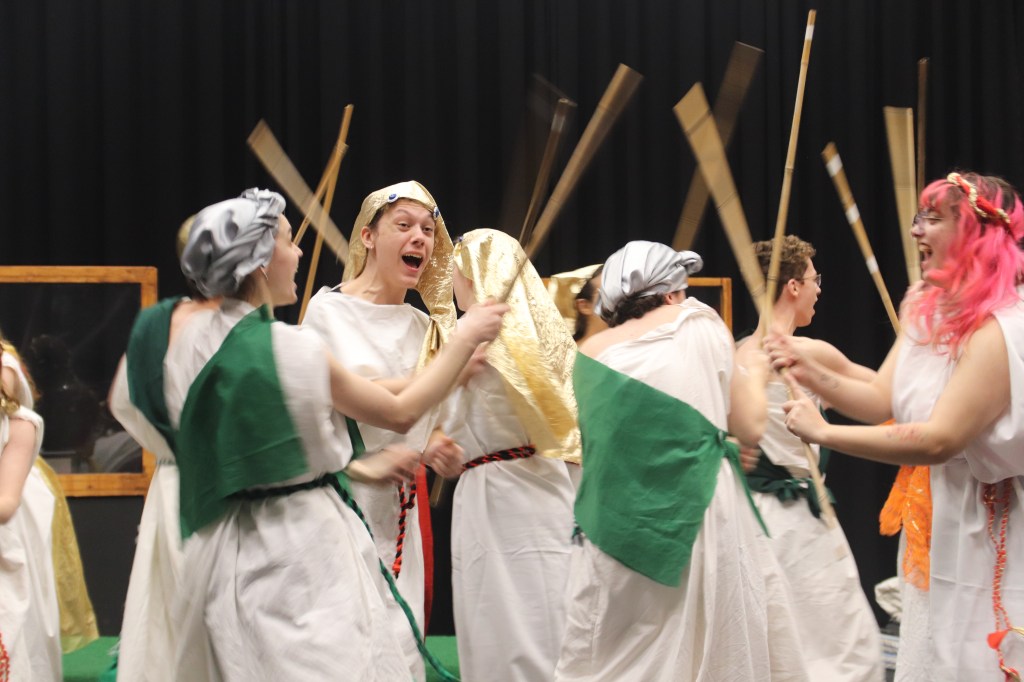
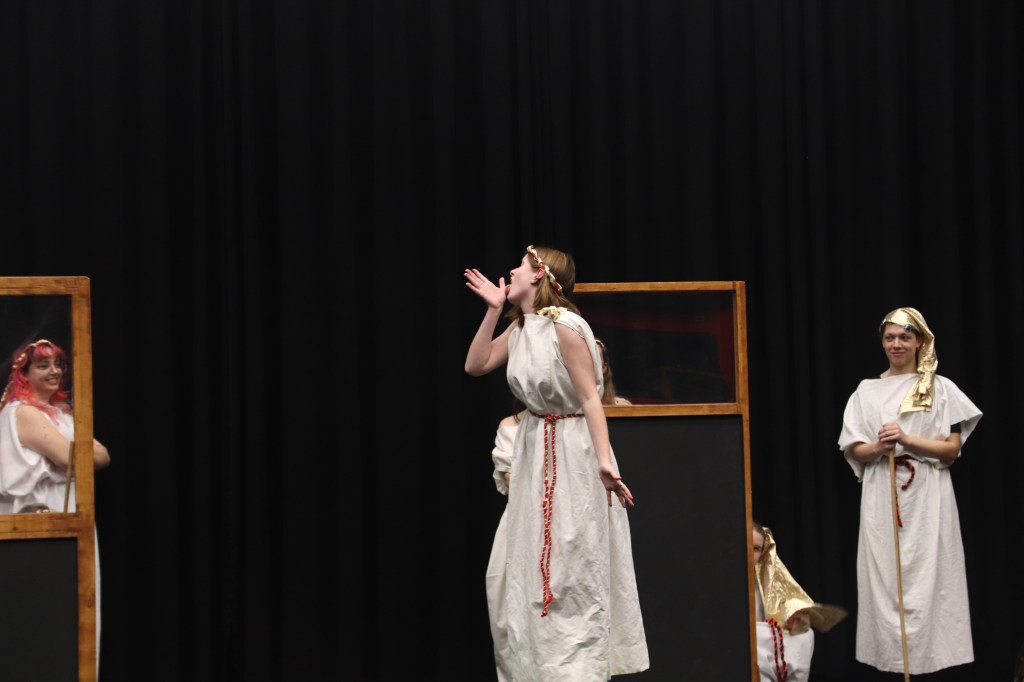
Luego decidimos que las mujeres que acompañan a Lisístrata en su lucha para acabar[3] con la guerra debían tener la misma importancia que ella, por tanto distribuimos los textos de la protagonista, que son muchos, entre las seis mujeres que siempre la acompañan y para que el público lo entienda mejor, añadimos un pequeño ritual en el que ellas se autodenominan «Lisístratas», es decir que todas ellas son una misma y quieren la misma cosa.
Además el nombre de Lisístrata tenía significado en lengua griega antigua y ese significado era «la que disuelve los ejércitos», pero nosotros, en la versión quisimos hacerlo mas evidente y por tanto las mujeres dicen: «Lisístrata: la que acaba con la guerra».
Además, limpiamos el texto de algunas referencias contemporáneas de Aristófanes, sobre todo las que eran muy particulares y que hoy en día solo entenderían los historiadores especializados en la Atenas de ese tiempo. Pero las referencias a la política, al desarrollo de la guerra, a los gobernantes y a las costumbres de las gentes de aquel tiempo las mantuvimos.
Por último, a manera de prólogo, yo compuse una canción, y escribí una introducción para el programa de mano, en la que introducimos al espectador en el mensaje que queremos transmitir y no es otro que poner en consonancia la obra con algunos de los problemas que hoy en día vuelven a atacar a la humanidad: la guerra y los neofacismos que traen consigo la perdida de derechos humanos, sobre todo entre los colectivos más desfavorecidos.
La introducción dice así:
LYSÍSTRATA TIENE TONO DE COMEDIA PERO INTENTA CRITICAR
En un mundo en el que creíamos que algunos problemas estaban superados; después de la lección que la segunda guerra mundial le había dado a la humanidad, aun con la guerra fría de fondo, pero con la caída del muro de Berlín y la desintegración de la Unión Soviética; nos creímos buenas personas. Pues ahora resulta que este siglo XXI, ayudado también por la pandemia de coronavirus, nos ha devuelto fantasmas del pasado: Las guerras cercanas y las no tan cercanas y el auge de los nuevos fascismos con sus consabidos machismos, LGTBI+ fobias, racismos, etc. nos hacen volver a temer.
Por eso una obra como Lisístrata, lamentablemente, se vuelve a hacer necesaria porque lo que escribió Aristófanes en el siglo IV a.C. fue un alegato en favor de la paz y, quizá sin buscarlo, también a favor del movimiento feminista. Eso sí, con muchas connotaciones sexuales y con diálogos políticamente incorrectos, como era de esperar en una comedia del enfant terrible Aristófanes, para que también veamos que todo lo que hoy en día se intenta censurar, en aquella época se mostraba sin tapujos.
En nuestra producción queremos poner en consonancia aquellos tiempos con estos sin que se pierda el tono de comedia disparatada, y por eso, Frida Roper y yo hemos hecho una versión respetuosa con Aristófanes adaptada sobre todo a nuestro grupo de actores y yo he compuesto una canción a modo de prólogo que, sin nombrar a nadie nombra a todos, para mostrar nuestro desacuerdo con lo que estamos viendo venir.
Así que como dicen unos versos de la canción:
That´s why from Alles is Drama,
we want our voice to rise!
Gracias por venir a escuchar la voz de estos chicos.
Y gracias, querido lector, por leerme. La semana que viene te contaré como ha ido el estreno
[1] Aquí tengo que contarte una anécdota que siempre que elijo actores y distribuyo personajes me viene a la mente: una anécdota que contó Meryl Streep en una entrevista. Cuando le preguntaron cuál había sido su primer personaje profesional, una vez que había terminado sus estudios teatrales, ella respondió que había sido en el coro de la obra Las Ranas (precisamente de nuestro autor Aristófanes) y añadió que su primera línea de diálogo fue «Croac». Deduce de aquí, lector, lo que te quiero decir.
[2] El Corifeo es el líder del Coro y por tanto tiene líneas en las que habla de manera individual, tanto con los otros miembros del coro, como con los otros personajes, mientras que los otros miembros del coro hablan siempre a la vez.
[3] Según se dice en algunos textos, pero Aristófanes solo le da nombre y diálogos a seis de ellas: Calonica, Mirrina, Lampito, Ismenia y Anticlea.
ANECDOTE 101
WE CONTINUE WITH LYSISTRATA.
This week I’ll continue talking about Lysistrata, but this time I’ll talk about the version that Frida Roper, production director of Alles is Drama, and I did. First of all I have to tell you that Alles is Drama is a student theatre association, which depends on the University of Maastricht and also receives financial support from the City Council. Its members, students of this university, are not professionals, but they do love this profession and this is noticeable in all the activities they carry out every year: they premiere three productions and convene workshops on theater, cinema, reading, theatrical writing, etc. For which they do hire directors or professional teachers, since both the University and the City Council require it, to continue providing the subsidies.
The first thing to keep in mind when you make a version of a play in which the actors are theater lovers, but who did not say this professionally, is that almost everyone who auditions, and those who are later chosen, wants to have relevant characters so you have to be very tactful when granting the characters. but above all when it comes to distributing dialogues. It’s hard to explain to them that there are no small characters, only small actors.
As I told you last week, Lysistrata is a Greek play that has two choruses and therefore we had to choose a lot of actors, but you know nobody (non-professional) likes to be a member of the chorus[1], because they think they are roles that in theatrical jargon we call «troupe». So the first decision we made was that we would distribute the Corypheus dialogues [2]among the members of the choir so that everyone would have more or less the same number of individual verses.
Then we decided that the women who accompany Lysistrata in her struggle to end[3] the war should have the same importance as her, so we distributed the texts of the protagonist, which are many, among the six women who always accompany her and so that the public understands it better, we added a small ritual in which they call themselves «Lysistrata». That is to say, they are all one and the same and they want the same thing.
In addition, the name Lysistrata had a meaning in the ancient Greek language and that meaning was «she who dissolves armies», but we wanted to make it more obvious in the version and therefore the women say: «Lysistrata: she who ends war».
In addition, we cleaned the text of some contemporary references to Aristophanes, especially those that were very particular and that today would only be understood by historians specialized in Athens at that time. But the references to politics, to the conduct of war, to the rulers and to the customs of the people of that time were kept.
Finally, as a prologue, I composed a song, and wrote an introduction for the program, in which we introduce the viewer to the message we want to convey and it is none other than to put the work in line with some of the problems that today attack humanity again: war and neofaciisms that bring with them the loss of human rights, especially among the most disadvantaged groups.
The introduction reads as follows:
LYSISTRATA HAS A COMEDIC TONE BUT TRIES TO CRITICIZE
In a world where we believed that some problems had been overcome; after the lesson that the Second World War had given to humanity, even with the Cold War in the background, but with the fall of the Berlin Wall and the disintegration of the Soviet Union; We thought we were good people. Well, now it turns out that this 21st century, also helped by the coronavirus pandemic, has given us back ghosts of the past: Wars close and not so close and the rise of the new fascisms with their well-known machismo, LGTBI+ phobias, racism, etc. make us fear again.
That is why a work like Lysistrata, unfortunately, becomes necessary again because what Aristophanes wrote in the fourth century B.C. was a plea for peace and, perhaps without seeking it, also in favor of the feminist movement. Of course, with many sexual connotations and politically incorrect dialogues, as was to be expected in a comedy by the enfant terrible Aristophanes, so that we can also see that everything that today is tried to be censored, at that time was openly displayed.
In our production we want to put those times in line with these without losing the tone of crazy comedy, and that’s why Frida Roper and I have made a respectful version of Aristophanes adapted above all to our group of actors and I have composed a song as a prologue that, without naming anyone, names everyone. to show our disagreement with what we’re seeing coming.
So as a few verses of the song say:
That´s why from Alles is Drama,
we want our voice to rise!
Thank you for coming to hear the voice of these guys.
And thank you, dear reader, for reading. This week I’ll tell you how the premiere went.
[1] Here I have to tell you an anecdote that comes to mind whenever I choose actors and distribute characters: an anecdote that Meryl Streep told in an interview. When asked what her first professional role had been, once she had finished her theatrical studies, she replied that it had been in the chorus of the play The Frogs (precisely by our author Aristophanes) and added that her first line of dialogue was «Croac». Deduce from this, reader, what I want to tell you.
[2] The Coryphaeus is the leader of the choir and therefore has lines in which he speaks individually, both with the other members of the choir and with the other characters, while the other members of the choir always speak at the same time.
[3] According to some texts, but Aristophanes only gives names and dialogues to six of them: Calonica, Myrrhina, Lampito, Ismenia and Anticlea.
 Norton Teatro