Hola amigos de nortonteatro.blog. Yos soy Nortan Palacio, conocido artísticamente, y en la Parroquia de Madre de Dios de Almagro, como Norton P.
Hello friends of nortonteatro.blog. I am Nortan Palacio, known artistically, and in the Parish of Madre de Dios de Almagro, as Norton P.
Viernes 15 diciembre 2023

ENGLISH VERSION: BELOW SPANISH VERSION
ANÉCDOTA 93
LOS DRAMATURGOS SEGUNDONES EN EL SIGLO DE ORO ESPAÑOL:
ÁLVARO CUBILLO DE ARAGÓN
A veces, investigando para este blog encuentro o recuerdo cosas que me unen a la anécdota que cuento o al personaje del que trato en dicha anécdota. Esto me pasa con Álvaro Cubillo de Aragón; y tú, querido lector, te preguntarás qué tendrá que unir al autor de este blog, nacido en la segunda mitad del siglo XX, al parecer en Colombia, con un autor del Siglo de Oro español que había nacido al parecer en Granada. Pues te lo voy a contar mientras te cuento su vida.
Todas las biografías de Álvaro Cubillo de Aragón coincidían en que había nacido en Granada en 1596; aunque nadie estaba seguro de que fuese en esa ciudad ni de la fecha exacta; y que murió en Madrid, esto sí es seguro, el 21 de 0ctubre de 1661.
El primero en decir lo de Granada fue Luis Vélez de Guevara, quien lo anotó en su más famosa obra El Diablo Cojuelo[1], de 1641, mencionando que Álvaro Cubillo de Aragón era un ingenio granadino, y en el Vejamen de Avellaneda en 1660 se dice que: «Álvaro Cubillo es ingenio de alquitrán, por ser de Granada» aunque estas no eran biografías al uso.
La primera biografía en la que se dice que «nació» en granada fue la de Cayetano Alberto de la Barrera[2], por allá en 1860, basándose en que los documentos en que se le mencionaba desde su niñez transcurrían en la ciudad andaluza, así se tuvo casi que por seguro por otros investigadores como Cotarelo y Mori en 1918.
Pero en 1970 el investigador Gallego Morell rebuscó, en todas las parroquias de Granada, partidas de bautismo de los dramaturgos del Siglo de Oro de los que se decía que eran granadinos y encontró sesenta, pero ninguna de Cubillo de Aragón. Así que se dedujo que su partida se había perdido, pero se siguió citando como granadino en todas las notas biográficas; incluidas las de Francisco Domínguez Matito, investigador que se especializó en Cubillo de Aragón y que buscó y rebuscó con minuciosidad entre 2004 y 2012 muchos documentos referentes a nuestro dramaturgo y encontró grandes cosas que se fueron añadiendo a su trayectoria vital, pero nada de su nacimiento.
En 2012 otro investigador Otero Mondéjar, añadió a la biografía de Cubillo que este tenía descendencia morisca y que esa descendencia no tenía su origen en Granada sino en otro sitio (un lugar de La Mancha) que luego mencionaremos, puesto que en esa villa se habían encontrado varios documentos de sus antecesores donde reclamaban al Santo Oficio los privilegios de cristianos viejos, a pesar de su ascendencia morisca. Parecía que los investigadores se iban acercando a su procedencia, pero todavía sin seguridad ninguna.
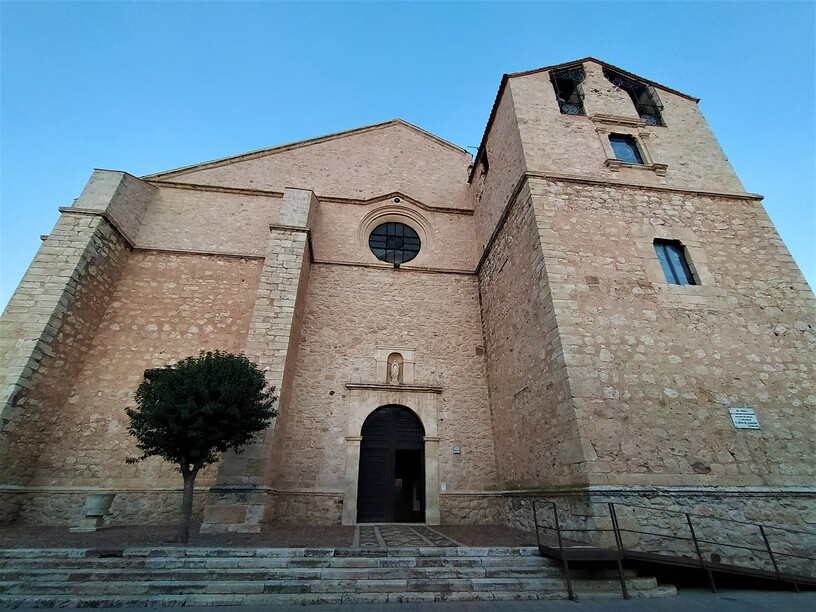
Gracias al descubrimiento ocasional en el año 2019, en el Archivo de Protocolos de Madrid, de una «Carta de dote y capitulaciones matrimoniales entre Gerónimo Cubillo y doña Josefa María Rodríguez de Figueroa del 2 de abril de 1678» se pudo dar con el dato. Resulta que este Gerónimo Cubillo es hijo de nuestro dramaturgo y declara en dicha carta que es «hijo legítimo de Álvaro Cubillo de Aragón natural de la Villa de Almagro…»[3]. A partir de ahí, los investigadores de este autor se trasladaron con sus lupas a todas las parroquias de Almagro a escudriñar las partidas de bautismo y se encontró que la de nuestro Álvaro Cubillo de Aragón, estaba en la Parroquia de Madre de Dios y reza así:
Sábado que se contaron diez días del mes de noviembre de mil quinientos noventa años. Bauticé yo, fray Juan del Castillo, Álvaro, hijo de Lorenzo Cubillo y María Rodríguez, su mujer. Fueron sus compadres Alonso, El gordo, El viejo y Álvaro Gutiérrez Cubillo, que le sacó de la pila, y sus comadres: Lucía Rodríguez, mujer de Álvaro Cubillo [e] Inés Rodríguez, doncella.
Lo que viene a cambiar la fecha de su nacimiento de 1596 a 1590 (lo hace seis años más viejo). Pero lo que es más grande: hace que Almagro, Villa Manchega tan vinculada al Teatro del Siglo de Oro español desde el redescubrimiento de su famosísimo Corral de Comedias y considerada la capital del Teatro Español (de hecho el Museo Nacional del Teatro español también se estableció ahí) cierre un círculo más de este vínculo: por fin hay una autor de ese grandioso siglo que nació en la localidad y que, aunque es «mal» considerado segundón, fue uno de los autores más influyentes de su tiempo en España, como veremos en la anécdota siguiente cuando analicemos su obra.
Y lo que me une a mí con este dramaturgo es el hecho de que la mayoría de mi vida profesional en el teatro, ya como actor, dramaturgo o director, la desarrollé en Almagro, sobre todo en el Corral de Comedias de Almagro, pero también en su Teatro Municipal en su Museo Nacional del Teatro, en su Parador Nacional y en varias de sus iglesias y ermitas, entre otras en la Parroquia de Madre de Dios. Y para más vínculo, y sé que esto, querido lector, quizá te sonara a romanticismo trasnochado: durante los veinticinco años que trabajé allí, pasaba todos los días por esa Parroquia de Madre de Dios, sin saber que ahí dentro (nadie lo sabía) se guardaba la partida de bautismo de Álvaro Cubillo de Aragón.
Pero sigamos con su trayectoria vital, que me pierdo
Se presupone que la familia se trasladó a Granada cuando Álvaro todavía era un niño y allí creció. Aunque su familia era acomodada no hay constancia de que haya terminado los estudios de leyes en la Universidad de Granada[4], estudios que le habrían permitido desarrollar la profesión de escribano en Granada que es la primera ocupación que se le conoce; aunque este trabajo no le era agradable y por eso andaba siempre metido en tertulias literarias que era lo que en realidad llamaba su atención. Por otra parte, en otro documento, el mismo Cubillo de Aragón dice que ostentaba el cargo de alcalde perpetuo de la Cárcel Real de la orden de Calatrava en Granada y que lo habría heredado de su padre, pero no se sabe si llegó a ejercerlo.
En este tiempo (entre 1622 y 1640) también vivió en Sevilla y en esta ciudad sí que se acercó al mundo teatral, primero como censor de comedias[5] y segundo como actor, pero lo que en realidad le llamaba la atención era el escribir tales comedias y se tiene constancia de que en 1630 empezaría con esta labor.
Pero como para aspirar a triunfar en el teatro había que estar en Madrid, en 1641 compró un cargo de escribano de Alcaldes de Casa y Corte en Madrid y se mudó allí con una prole amplia: se había casado en Granada con Inés de la Mar en 1622 y cuando se trasladaron a la corte ya tenían seis hijos y llegaron a tener cinco más, aunque varios no alcanzaron la edad adulta y, por su testamento sabemos que solo seis de ellos sobrevivieron a la muerte de su padre.
El hecho de que el nuevo cargo no era muy generoso en salario, que la vida en Madrid era más costosa que en Granada o Sevilla y que la cantidad de hijos por mantener era verdaderamente grande, la vida de nuestro dramaturgo se hacía difícil y tenía que escribir muchas comedias y poemas de circunstancias dedicados a los nobles para lograr sobrevivir, por lo que también fue un autor prolijo y según él mismo asegura escribió más de cien comedias; algunas de ellas contaron con gran éxito del público de su tiempo, y gozan de una consideración literaria, de la que daremos cuenta, que ahora está generando curiosidad y que se adivina como muy importante.
En una obra miscelánea que compuso en 1654 titulada El Enano de las Musas (y de la que también hablaremos) nos dejó constancia de este número de obras teatrales y también nos resumió su trayectoria vital así:
Lector: yo soy un ingenio
de fortuna (Dios delante)…
Hiciéronme conocido
cuando muchacho las clases,
cuando joven las audiencias,
cuando adulto los Corrales.
Queridísimo lector: para que sepas cómo fue ese hacerse conocido en los Corrales, y en este tu blog, Cubillo de Aragón, nos vemos en la próxima anécdota.
[1] Ya hablé de este autor y de esta obra en la anécdota 88 de este blog.
[2] En su Catálogo bibliográfico y biográfico del teatro antiguo español, desde sus orígenes hasta el siglo XVIII, libro imprescindible para los amantes del teatro y que recomiendo siempre en este blog.
[3] Los que me conocen ya se van imaginando por qué dije antes que algo me unía al dramaturgo de esta semana.
[4] Aunque ahora que se sabe que nació en Almagro se ha abierto otra fuente de investigación acerca de sus estudios: podría haber estudiado en la Universidad de esta Villa, Universidad instaurada allí por una cédula de Carlos I en 1536. No obstante, por el momento la mayoría de los investigadores convienen en que vivió en Granada desde niño.
[5] Hay un documento donde Álvaro Cubillo de Aragón aprueba una obra de Antonio Mira de Amescua: El mártir de Madrid de 1622.
ANECDOTE 93
THE SECOND PLAYWRIGHTS IN THE SPANISH GOLDEN AGE:
ÁLVARO CUBILLO DE ARAGÓN
Sometimes, while researching for this blog, I come across, or remember, things that connect me to the anecdote about I tell or the character about I discuss in that anecdote. This happens to me with Álvaro Cubillo de Aragón; and you, dear reader, may wonder what must unite the author of this blog, born in the second half of the twentieth century, apparently in Colombia, with an author of the Spanish Golden Age who was apparently born in Granada. Well, I’m going to tell you about it while I tell you about his life.
All the biographies of Álvaro Cubillo de Aragón agreed that he was born in Granada in 1596; although no one was certain if it was in that city or of the exact date; and that he died in Madrid, this is certain, on the 21st of October, 1661.
The first to mention about Granada was Luis Vélez de Guevara, who noted it in his most famous work El Diablo Cojuelo[1], from 1641, mentioning that Álvaro Cubillo de Aragón was a talented individual from Granada, and in the Vejamen by Avellaneda in 1660 mentioned: «Álvaro Cubillo is a tar talent, because he is from Granada» although these works were not biographies in use.
The first biography in which it is said that he was «born» in Granada was that of Cayetano Alberto de la Barrera[2], in 1860, based on the fact that the documents in which he was mentioned since his childhood took place in the Andalusian city. This was almost accepted as true by other researchers such as Cotarelo y Mori in 1918.
However, in 1970, researcher Gallego Morell searched all the parishes of Granada for baptismal certificates of playwrights from the Golden Age who were said to were born in Granada, and found sixty, but none for Cubillo de Aragón. So it was deduced that his certificate had been lost, but he continued to be mentioned as being from Granada in all the biographical notes; including those by Francisco Domínguez Matito, a researcher who specialized in Cubillo de Aragón and who searched and searched in detail between 2004 and 2012 for many documents referring to our playwright and found great things that were added to Cubillo life trajectory, but nothing about his birth.
In 2012 another researcher, Otero Mondéjar, added to Cubillo’s biography that he had Moorish descendants, and that this descent originate not from Granada but in another place (a place in La Mancha) that I will mention later, since in that town several documents of his ancestors had been found where they claimed the privileges of old Christians from the Holy Office, despite his Moorish ancestry. It seemed that the researchers were getting closer to his origin, but still without certainly.
Thanks to the accidental discovery in 2019, in the Archive of Protocols of Madrid, of a «Dowry and Marriage Settlement letter between Gerónimo Cubillo and Doña Josefa María Rodríguez de Figueroa dated April 2, 1678» it was possible revealed the data. This Gerónimo Cubillo is the son of our playwright and declares in that letter that he is «the legitimate son of Álvaro Cubillo de Aragón, a native of the Villa de Almagro…».[3] From there, the researchers of this author turned with their magnifying glasses to all the parishes of Almagro, scrutinizing baptismal certificates, and it was found that the one of our Álvaro Cubillo de Aragón, was in the Parish of Madre de Dios, and reads as follows:
Saturday, which was counted ten days in the month of November, one thousand five hundred and ninety years. I, Fray Juan del Castillo, baptized to Álvaro, son of Lorenzo Cubillo and María Rodríguez, his wife. It was his compadres Alonso, El gordo, El viejo and Álvaro Gutiérrez Cubillo, who took him out of the pile, and his comadres: Lucía Rodríguez, wife of Álvaro Cubillo [and] Inés Rodríguez, maid.
Which changes his birthdate from 1596 to 1590 (making him six years older). But more importantly, it stablishes that Almagro, Manchegan Villa so closely linked to the Spanish Golden Age Theatre, since the rediscovery of its famous Corral de Comedias and considered the Capital of Spanish Theatre (in fact the National Museum of Spanish Theatre was also established there), closes one more circle of this connection. Finally there is an author from that splendid Century who was born in the town and, although he is «wrongly» considered seconded, he was one of the most influential authors of his time in Spain, as we will see in the following anecdote when we analyze his works.
And what connects me with this playwright is the fact that most of my professional life in the theatre, whether as an actor, playwright or director, was spent in Almagro, especially in the Corral de Comedias de Almagro, but also in its Municipal Theatre, in its National Theatre Museum, in its Parador Nacional and in several of its churches and hermitages. among others in the Parish of Madre de Dios. And to add insult to injury, and I know that this, dear reader, may have sounded like outdated romanticism: during the twenty-five years I worked there, I passed by that Madre de Dios Parish every day, without knowing (no one knew) that the baptismal certificate of Álvaro Cubillo de Aragón was kept inside.
But let’s continue with his life trajectory; otherwise, I’m missing.
It is assumed that the family moved to Granada when Álvaro was still a child and grew up there. Although his family was well-off there is no evidence that he finished his law studies at the University of Granada[4], studies that would have allowed him to develop the profession of notary in Granada, which is his first known occupation; however, this work was not pleasant for him, and that is why he was always involved in literary gatherings, which was what really caught his attention. On the other hand, in another document, the same Cubillo de Aragón says that he held the position of perpetual mayor of the Royal Prison of the order of Calatrava in Granada, supposedly inherited from his father, but it is unclear if he ever exercised it.
During this time (between 1622 and 1640) he also lived in Seville and in this city he got closer to the theatrical world, first as an auditor of comedies[5] and later as an actor, but what really caught his attention was writing such plays and it is known that in 1630 he began this work.
But since to aspire to succeed in the theatre you had to be in Madrid. So, in 1641, he bought a position as notary of Mayors of the House and Court in Madrid and moved there with a large family: he had married Inés de la Mar in Granada in 1622, and by the time they moved to the court, they already had six children and had five more in Madrid. although several did not reach adulthood and, from his will, we know that only six of them survived the death of their father.
The fact that the new position was not very generous in salary, that life in Madrid was more expensive than in Granada or Seville, and that the number of children to support was really great, the life of our playwright became difficult and he had to write many comedies and laudatory poems dedicated to the aristocracy in order to survive. So, he was also a prolific author and, according to his own assurances, wrote more than a hundred comedies; Some of them were very successful with the public of that time, and enjoy a literary consideration, of which we will give an account, which is now generating curiosity and which is guessed to be very important.
In a miscellaneous work that he composed in 1654 entitled El enano de las Musas (The Dwarf of the Muses), and of which we will also speak, he left us a record of this number of plays and also summarized his life trajectory as follows:
Reader: I’m a wit
of fortune (with God grace)…
They made me known:
When I was boy, the classes,
When I was young, to audience chambers,
to Corrales when an adult
Dearest reader: with how it was to he became known in the Corrales, and in this your blog, about Cubillo de Aragón, we will see you in the next anecdote.
[1] I already talked about this author and this work in anecdote 88 of this blog.
[2] In his Bibliographic and Biographical Catalogue of Ancient Spanish Theatre, from its Origins to the Eighteenth Century, an essential book for theatre lovers and which I always recommend fromthis blog.
[3] Those who know me, can already imagine why I said earlier that something linked me to this week’s playwright.
[4] Although now that it is known that he was born in Almagro, another source of research has been opened about his studies: he could have studied at the University of this town (Almagro), a University established there by a decree of Charles I in 1536. However, for the time being, most researchers agree that he lived in Granada since he was a child.
[5] There is a document where Álvaro Cubillo de Aragón approves a work by Antonio Mira de Amescua: The Martyr of Madrid of 1622.
 Norton Teatro